Cars These Days
The Great Repavement Theory

(This is a long article)
On December 5 1996, a man in Kentucky drove into a phone pole, killing his friend. His friend’s wife, who was paraplegic, was pregnant at the time. 20 years later, their 20-year-old son drove his car into a crowd at the Unite the Right rally in Charlottesville, Virginia, murdering Heather Heyer. Heyer was there protesting against the ralliers who had been chanting “the Jews will not replace us”.
On January 5 2022, in Missouri, Victoria Wilson was out celebrating her 15th wedding anniversary, when a drunk driver crashed into her car, killing her and badly injuring her husband. 364 days earlier, the drunk driver, a 24-year-old woman, had been photographed inside the US Capitol, in Nancy Pelosi’s office, holding up a picture of Pelosi’s broken nameplate. On November 5 2024 – coincidentally, the day Trump was re-elected – she pled guilty in court to driving intoxicated leading to a person’s death. On January 20, 2025, the day of Trump’s second inauguration, she was one of more than 1500 people to receive a presidential pardon for the events of Jan 6. She is not the only one of them who has since been re-convicted for a deadly car crash.
Nancy Pelosi, meanwhile, had her home broken into on October 28 2022. Her 82-year-old husband Paul was struck in the head with a hammer by the anti-Pelosi home invader. (President Trump suggested the attack may have been a left-wing conspiracy). Two months earlier, Paul Pelosi had been sentenced to five days in prison for drunkenly crashing into another vehicle. 64 years before that, he killed his brother by speeding in a sports car at the age of 16. During the years that elapsed between Pelosi’s reckless teenage driving and intoxicated elderly driving, an estimated 3 million Americans were killed in road crashes, the #1 cause of death for young people.
One of those young people, Janie Mae Mitchell, was killed at the age of 26, by a drunk driver in a pickup truck on June 5, 1981, in North Carolina. It was the driver’s second DUI; he was sent to prison for four months, had to sell the bar that he owned as a result of legal troubles owing to the crash, and moved to New Mexico after his marriage ended three years later. One of his children, who was 11 years old when the crash occurred, is Greg Bovino, the “commander at large” of Border Patrol operations in Minneapolis, Chicago, and LA during Trump’s second term.
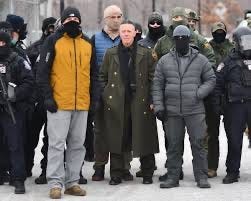
According to the Chicago Sun Times, “Bovino has repeatedly cited the threat of undocumented immigrants who’ve killed US citizens while driving drunk. The Trump administration said Operation Midway Blitz was launched in Chicago [in September 2025] in honor of one of them, a 20-year-old DUI victim.” Most research however suggests that undocumented immigrants are less likely on average to drive while intoxicated, or break other road laws, than American-born drivers are, because they are afraid of being deported and because they are less likely to own a car.
The first undocumented immigrant to be killed by ICE since Trump was re-elected may1 have come at the beginning of Midway Blitz, at a Chicago traffic stop on September 12, 2025. ICE officers claim an “illegal alien”, Silverio Gonzales, who had lived in Chicago for 20 years with no criminal record except for “a history of reckless driving”, tried to ram them with his car, and dragged an officer “a significant distance” as he tried to drive away. The officers were not wearing body cameras, so there was no proof to verify this claim. But videos taken from two nearby storefronts, a bystanders’ phone, and a local policeman’s body camera appear to show that an attempted ramming probably did not occur.
The first American citizen killed by ICE in 2025 is thought to have been Ruben Ray Martinez, a 23-year-old who was shot three times by an officer who claims that Martinez “intentionally ran over a Homeland Security Investigation special agent”.2 Again the available evidence appears to show that this claim is probably false. What seems to have actually happened was that a nearby car accident caused a road closure, and Martinez, out celebrating his birthday and driving while carrying an open bottle of alcohol, was trying to turn his car around in the middle of the hectic intersection where the crash occurred, which one of the officers might have misunderstood as an aggressive or insubordinate action.
The only witness, Martnez’ friend Joshua Orta, stated that Martinez was entirely innocent and shot without any warning. But Orta was killed a few weeks ago in a high-speed car crash, not yet having signed the legal statement he made in Martinez’ defense.
A month into Midway Blitz, Trump’s Department of Homeland Security alleges – oddly, on a webpage they’ve titled ‘Cicero or Sicario: A Day of Crashes’ – that there were four separate incidents of trying to ram ICE officers with cars on a single day. In Minneapolis in June, ICE agent Jonathan Ross, who would later kill Renee Good, had his arm caught in the window of a car during an attempted arrest, and said he was dragged about 50 metres by the vehicle as the driver tried to flee.
On January 7, 2026, 400 metres away from the White House, a car driving at highway speeds ran a red light and killed a 26-year-old pedestrian, Aaron Marckell Williams, as he was walking to church. A few hours later, in Minneapolis, Renee Good was shot to death. The government’s actions following both killings were dangerous. Trump of course falsely posted that Good “ran over” ICE officers with her SUV, and members of his cabinet called her a domestic terrorist. But his government also, on Jan 7 2026, submitted a proposal to remove Washington, D.C.’s 500+ speeding cameras and red light cameras3; cameras meant to reduce the number of road crimes and pedestrian deaths.4







Transportation Secretary Sean Duffy met his wife Rachel Campos on the set of Road Rules: All-Stars, a spinoff of MTV’s The Real World, on which they were both contestants. When Campos was starring in a previous season of The Real World, she was badly injured in a car crash, which killed her boyfriend and another friend. Before Duffy entered Trump’s cabinet, Duffy and Campos worked for Fox News, and in 2021 they co-wrote the book All American Christmas. Duffy’s main focus as the US Transportation Secretary has been revoking driving licenses for undocumented immigrants.
In December, Duffy tweeted “We’ve now knocked 9,500 truck drivers out of service for failing to speak our national language — ENGLISH! This administration will always put you and your family’s safety first.”
The day after he was confirmed as Transportation Secretary, Duffy signed a memo which stated, according to the New York Times, that “all of the department’s grant and loan programs should prioritize projects in ‘communities with marriage and birthrates higher than the national average’, to the extent allowed by law”.
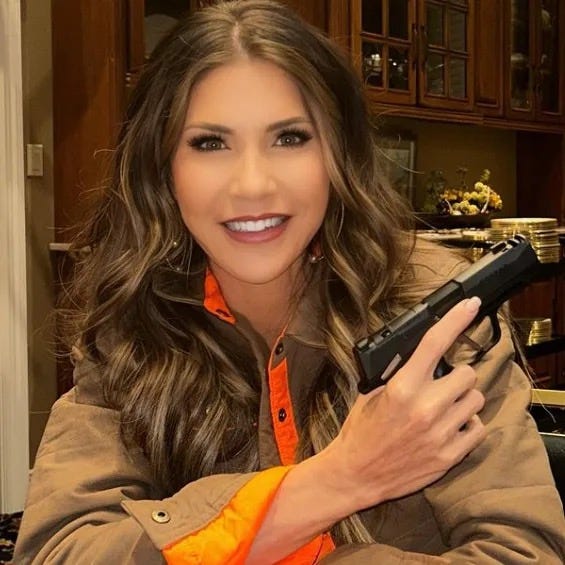
Kristi Noem, Trump’s Department of Homeland Security Secretary currently formerly6 in charge of agencies like ICE, is a serial speeder whose political career has twice been impacted by fatal car crashes.
First, in 2011, Noem won South Dakota’s sole Congressional seat in the US House of Representatives, a position that became available after her Republican predecessor Bill Janklow killed Randy Scott, a 55-year-old from Minnesota, by driving at high speed through a stop sign.
Janklow, who before entering Congress had been South Dakota’s governor for sixteen years – the fourth-longest serving governor in US history – had many previous unpunished speeding violations, and spent 100 days in jail after his crash. He had also previously been accused, according to Wikipedia, “of raping 15-year-old Native American Jancita Eagle Deer at gunpoint in 1967. The FBI reopened the case in 1975 when Janklow was appointed by Gerald Ford to the board of the Legal Services Corporation, but investigations were closed at the request of the White House. Jancita and her mother Delphine died shortly thereafter, of apparently unrelated homicides, both unsolved”. Jancita was killed by a car on a rural road in Nebraska in April 1975.
Janklow’s resignation led to a Democrat winning South Dakota’s Congressional seat in 2004 (the only Democrat to do so since former Senate majority leader Tom Daschale in the 1980s), before Noem won it back for the Republicans. During Noem’s Congressional race the public learned that she had incurred over 20 speeding tickets and two arrest warrants, including one for driving at above 150 km/hr (94 mph).
In 2019 Noem became governor of South Dakota. Her attorney general, Jason Ravnsborg, was initially a close ally. He was, for example, one of the 17 attorneys general of pro-Trump states to file a lawsuit claiming election fraud in four swing states in the 2020 presidential election. In 2019, two weeks into Noem’s term, he testified in support of a bill signed into law by Noem to make South Dakota the 14th state to allow its residents to carry concealed handguns without a permit. But in 2020 Ravnsborg too killed a 55-year-old man, Joseph Boever, while texting and driving.
Ravnsborg, it turned out, had also been a frequent offender, like Janklow and Noem. According to South Dakota’s Department of Public Safety, “On August 22, 2021, four days before his scheduled trial on the charges arising from Joseph Boever’s death, he received another speeding ticket, his seventh in South Dakota since 2014…Ravnsborg had been the subject of 27 traffic stop reports in three states since 1996… Nine of the citations were for speeding, including instances where he drove more than 35 km an hour (22 mph) over the posted speed limit”. These were just the times when police caught him: speed cameras have been banned in South Dakota since 2014.
Boever was walking along the side of the highway when he was hit, attempting to retrieve his pickup truck which he had crashed into a ditch hours earlier. Ravnsborg lied about the crash, saying that “he discovered Boever’s body the next morning when he returned the sheriff’s car and went to the scene of the collision to search for the carcass of the deer he thought he had struck…The investigators indicated that Boever had been stuck partially inside Ravnsborg’s vehicle for an undetermined amount of time. Boever’s broken reading glasses were discovered inside Ravnsborg’s Ford Taurus, leading detectives to tell Ravnsborg that “his face was in your windshield””. Ravnsborg was fined $1,000, settled a civil suit brought by Boever’s wife, and avoided any jail time.
“One thing I’m good at is driving,” Ravnsborg said at a public meeting just months before the crash.
Noem, despite granting pardons to several vehicular homicide DUI-repeat-offender convicts while governor, called for Ravnsborg’s resignation after Boever’s death. Ravnsborg responded by filing several ethics complaints against Noem in 2021, alleging she used state airplanes for her family’s private purposes, and manipulated state officials after her daughter’s request for a real estate appraiser licence was initially declined. But in 2022, Ravnsborg was impeached and Noem re-elected.
When Noem was finally fired from her role as head of the Department of Homeland Security on March 5, it came immediately after testifying to Congress about spending 200+ million dollars of the department’s money to buy two luxury private jets, among other misuses of government funds.
When Noem and other leaders attempted to justify the shooting of Alex Pretti in Minneapolis on January 24 because Pretti was (legally) carrying a gun, many people thought they were being despicably hypocritical, considering their previous veneration and interpretation of the Second Amendment. But it was nearly as remarkable to see their response to Good’s killing, when members of Trump’s cabinet, and Trump himself, began arguing in their own defence that SUVs can be used dangerously.
Right. In the decade since Trump’s first presidential race, as larger SUVs and light trucks have become ubiquitous, there have been approximately 400,000 US road deaths, which is roughly 56,000 more deaths than would have occurred had the rate of road fatalities stayed where it was in 2014. Approximately 70,000 of these road deaths were pedestrians, which is roughly 21,000 more pedestrians than would have died had pedestrian fatality rates stayed where they were in 2014. If the US would have had even the same fatality rates as Canada or Australia during the past decade, then roughly 230,000-240,000 fewer Americans would have died in road crashes than actually did, including 44,000-49,000 fewer pedestrians.
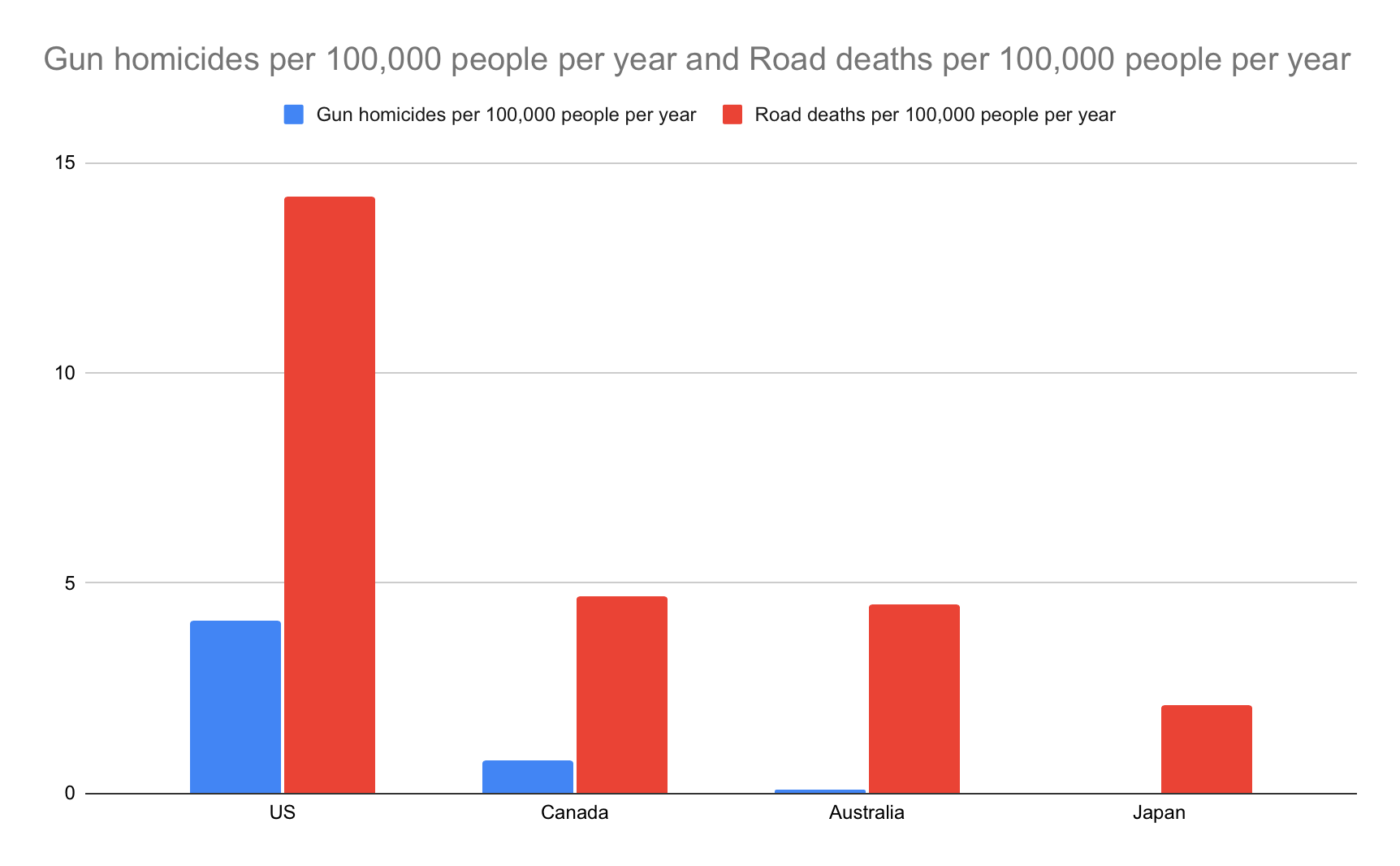
On January 7, 2026, the same day that Renee Good was killed in Minneapolis and Aaron Williams was killed outside of the White House, a 16-year-old driver died after causing a three-car crash outside of a luxury golf resort in Florida, 15 miles from Mar a Lago. Among others.
Though it was overlooked as compared to Good’s killing, it was Williams’ death that was the rule, not the exception. This is not just because US pedestrian deaths have risen rapidly in the past decade, faster than at any time since the 1920s. And it is not just because black Americans, like Williams, are on average much more likely to be killed as pedestrians than are Americans in general. It is also because of the specific circumstances of Williams’ death. He was killed by a 20-year-old driver who was fleeing a traffic stop at high speed, who then caused a five-car crash at the intersection in which Williams was walking. The police had tried to pull the driver over because his car was flagged as having been involved in a deadly hit-and-run in Virginia a month earlier.
Astonishingly, the number of Americans who are killed during police pursuits each year likely exceeds the annual number of pedestrians killed by drivers of all kinds in (respectively) Britain, Canada, Australia, or any country in the European Union. Police pursuits are estimated to be the result of 30-40% of all deaths involving the police in the US. Approximately 25-50% of these deaths are thought to be of innocent bystanders, whether pedestrians, drivers in other cars, or passengers in the fleeing car who have not committed any criminal offense themselves. This is the most common way law enforcement actions result directly in innocents being killed in the US.
Sometimes police pursuits indirectly trigger car crashes, by creating road-closure bottlenecks that can be especially dangerous on US roads. This is what happened for instance in the case of Ryan Routh, who a few weeks ago was convicted for attempting to assassinate Donald Trump at a golf course in Florida several weeks before the 2024 election. When Routh fled the golf course in his car, the sudden closure of the highway by the pursuing police led to a five-car crash, causing a six-year-old girl to enter a prolonged coma and become (as of yet) non-responsive7. Routh should never have been driving in the first place: he had previously been involved in a hit and run, had engaged in a three-hour standoff with police while he was armed with a machine gun after fleeing a traffic stop in 2003, and had been repeatedly caught speeding and running red lights.
Enforcement systems like speed and red light cameras are intended not only to deter dangerous road crimes and free up scarce police resources, but also to reduce the number of traffic stops police have to carry out, since traffic stops often lead to injuries and deaths involving guns or car chases.
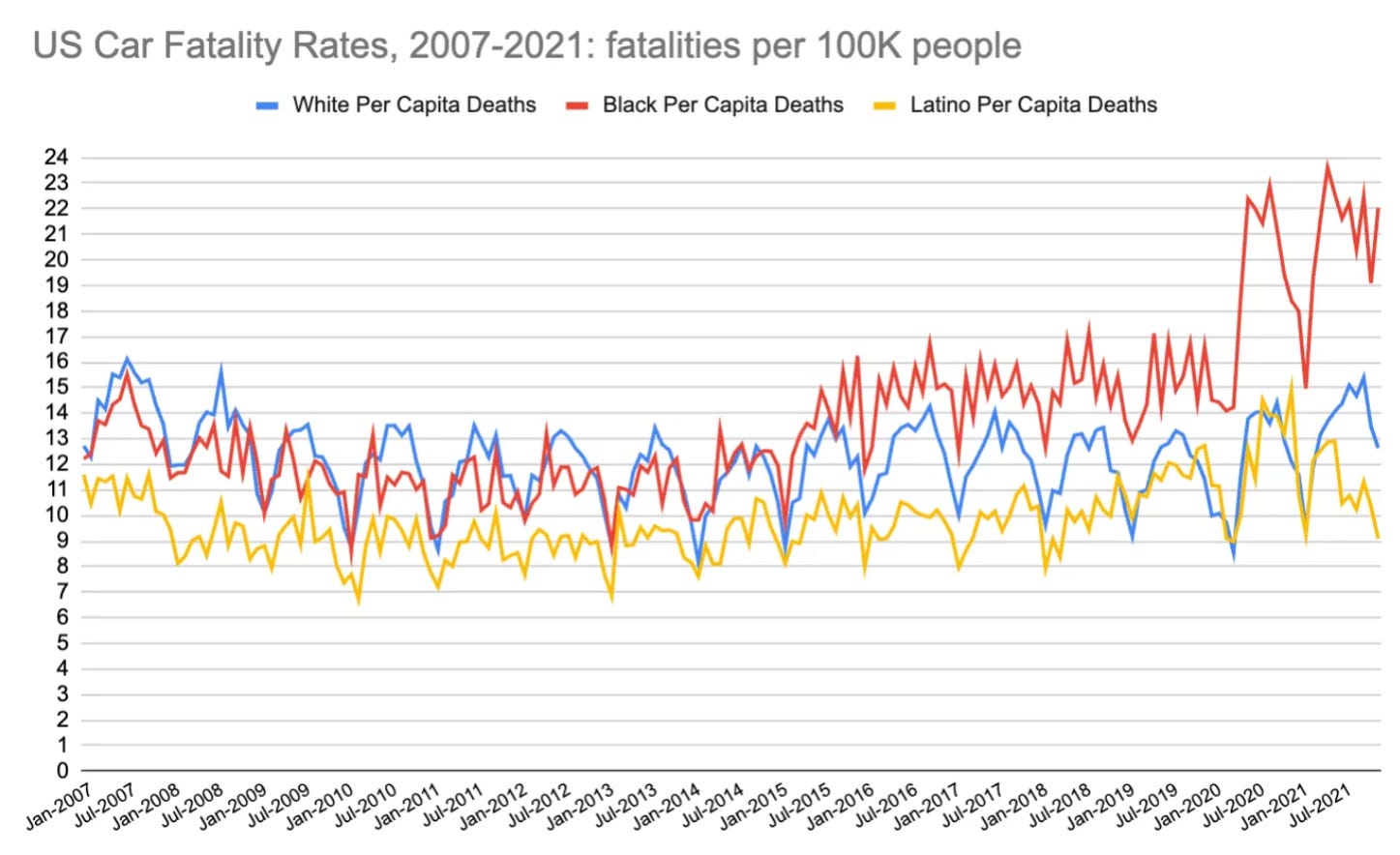
Source:
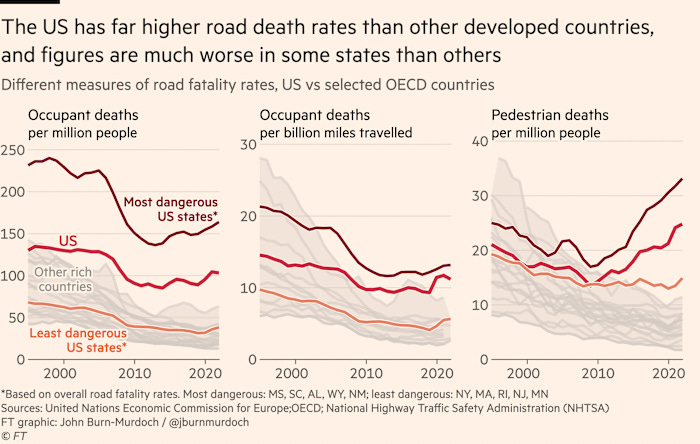
Here are two recent anecdotes of police pursuits in Minneapolis, one in which the police acted responsibly and the other in which they did not, but both ending in disaster. Both occurred during the first year or two of the Covid-19 pandemic, after George Floyd was killed on May 25, 2020 – a period of time when, among other things, there was a major increase in deaths of black Americans in road crashes (see chart above). American road deaths in general rose as well at this time, in contrast to most other rich countries where the pandemic caused road deaths to fall.
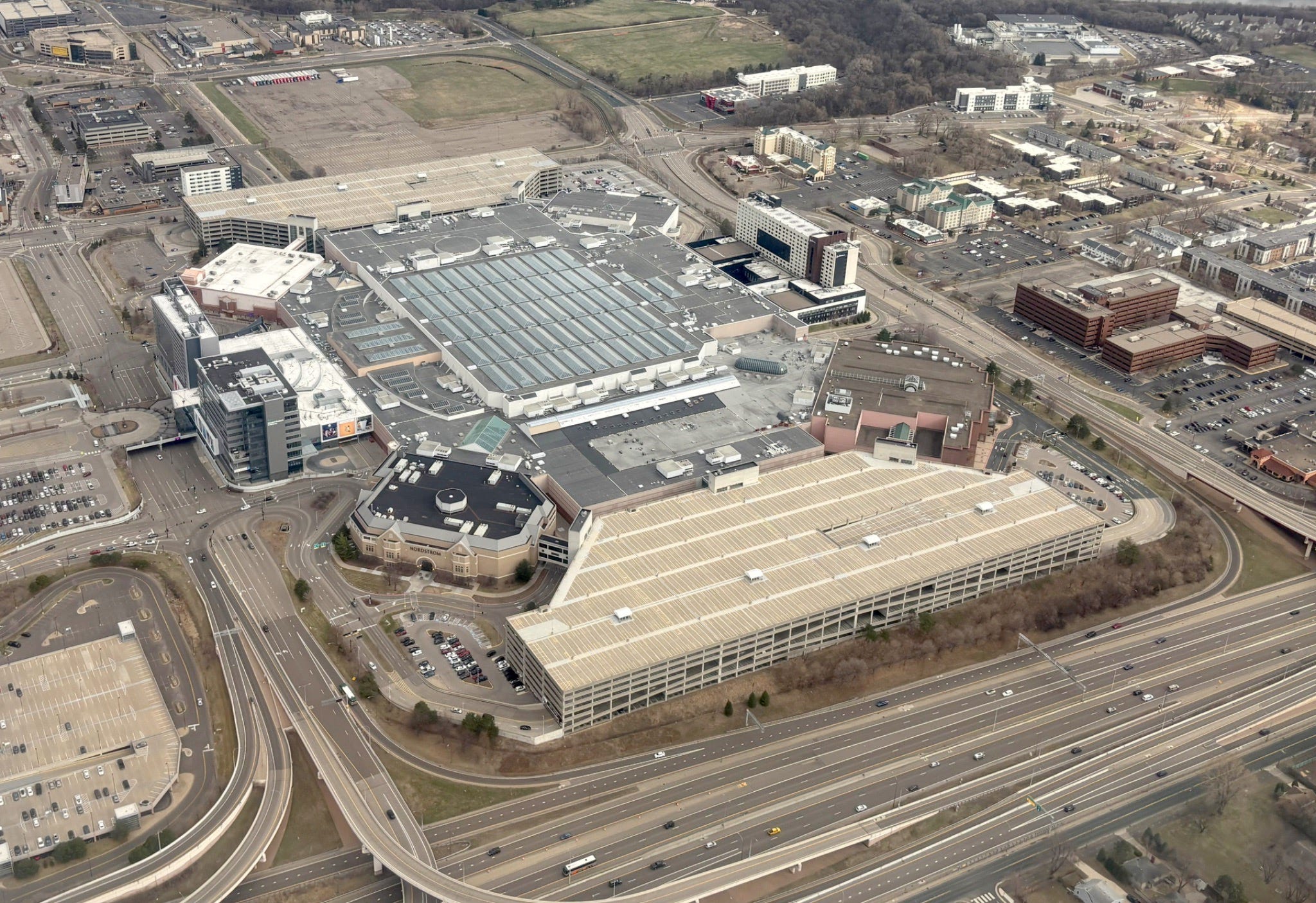
The first of these deaths was of Winston Boogie Smith Jr, who in June 2020 fled from police by driving the opposite direction down an interstate highway at high speed, near the Mall of America in Bloomington, Minnesota. The police called off the chase, and nobody was killed. But a year later Smith was shot by a police officer. Smith’s girlfriend claims he was just pulling out his phone, while police claim he was going for his gun.
Ironically, for a man whose name (Winston Smith) is synonymous with government surveillance, the US Marshals Service task force involved in the shooting did not allow the use of cameras, so it is difficult to know what really happened8. Protests in Minneapolis ensued as a result, demanding among other things the use of body cameras.
At these protests, a driver in a Jeep Grand Cherokee drove into a crowd, killing Deona Marie Knajdek, a 31-year-old woman who was sitting inside her parked car, which she had been using to protect the demonstrators. The driver was intoxicated at the time, and he had five prior DWI convictions.
The other case occurred a month later, also in Minneapolis, on July 6 2021. This time, a police pursuit did lead to the death of an innocent bystander, and the police officer involved turned out to have had a long history of engaging in reckless pursuits. The officer was chasing after the driver of a stolen Kia (Kias and Hyundais were stolen in large numbers during covid) but as he did so he drove at 90 mph through a red light and killed Leneal Frazier, a 40-year-old who was driving through the intersection in his own car. The police officer pleaded guilty and was sentenced to nine months in the county workhouse.
The issue of cameras was relevant in this case too, albeit indirectly: Leneal was the uncle of Darnella Frazier, the teenager who famously filmed George Floyd’s death outside Cup Foods one year earlier.
The proposal to ban traffic cameras in Washington took place at the exact time as the country was pouring over the phone-camera footage of Renee Good. Following that case too, the Trump administration initially rejected proposals to mandate that ICE officers wear body cameras, before finally giving into public pressure to do so a month after Good’s death. The argument that Republicans have repeatedly used against traffic cameras, meanwhile, namely that they could be a slippery slope to surveillance state, also runs counter to their approach to government agencies such as ICE, which has been allowed to employ high-tech surveillance technologies, including facial recognition. A similar disconnect exists in attempting to ban traffic cameras in D.C. in particular, which are only a tiny share of the 30,000 or so government cameras in the capital.9
Of course, surveillance is a legitimate concern, though the threat of it now comes especially from the billions of private cameras in the country – increasingly including cameras built into cars, like Teslas – rather than from traffic cameras or police body cameras intended to provide and improve law enforcement. Recently for example a Super Bowl commercial for Amazon’s Ring was ridiculed when it showed off its mass surveillance that could be used to rescue the “over one dog a day” that goes missing in America. Public backlash following the ad led Ring to announce it would be ending its partnership with Flock Safety, a surveillance company whose main service is providing automated license plate readers to police and private businesses.
We might, in other words, be entering a worst-of-both-worlds situation, in which video surveillance is widespread, yet politicians still forbid basic tools like speed cameras, even as the speeders and their crashes are filmed and shared anyway by private cameras10.
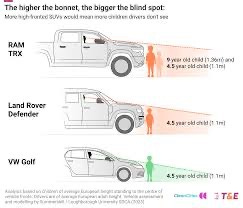
Companies like Ring presumably already record the deaths of hundreds of people – and thousands of pet dogs – on US streets every year. Over 3000 dogs a day are killed by US drivers, a number that has been rising for many of the same reasons that child pedestrian deaths and injuries have been: because SUVs and trucks have large blind spots in seeing things that are low to the ground, parked SUVs and trucks create even larger blind spots for seeing anything that is about to step out into the road, many drivers now roll through residential neighbourhoods while scrolling on their phones or dashboard computer screens, and residential streets are usually designed for car speed more than for pedestrian use.
Even without doorbell cameras, tech companies probably already have the data that would allow them to determine which of their phone and app users are serially texting and driving. They might already know the actual number of people who are killed by drivers distracted by their phones, a number which is likely to be significantly higher than NHTSA’s very rough estimate of 3300 distracted driving deaths per year, which is based merely on available police reports. And they might already know who the worst speeders are, or who the most dangerous drivers are in general.
But even leaving aside the issue of private surveillance, the government’s anti-traffic-camera argument would at least hold more weight if it were taking other significant steps to address pedestrian safety. Instead, it seems to care about illegal driving primarily when the driver is an ‘illegal’.
When, on August 12, an undocumented Sikh truck driver made an illegal U-turn that resulted in three people being killed on a Florida highway, governor DeSantis responded by sending his lieutenant governor Jay Collins to California (on Collins’ first day on the job) to escort the driver back to Florida. He sent Collins — who is now running to become Florida’s new governor in 2026, when DeSantis’ term ends — even though extraditions of this kind are normally carried out by US marshals rather than by politicians11, and even though there were a number of other Floridians who were killed in unrelated road crashes that same day. (As there are every day: Florida now has more road deaths each year than any single developed country outside the US, by a large margin).
The Department of Homeland Security wrote about the incident on a webpage titled Criminal Illegal Alien Recklessly Driving an 18-Wheeler Kills Three in Florida, but decided not to mention on the webpage that the three who were killed were Haitian immigrants returning to Haiti.
The Department of Homeland Security article states:
‘Video obtained from Breaking911 from inside the tractor trailer shows the exact moment Singh decided to break U.S. highway laws as he turned his truck into traffic- his face shows no shock or remorse for his actions or the lives he destroyed. “Three innocent people were killed in Florida because Gavin Newsom’s California Department of Motor Vehicles issued an illegal alien a Commercial Driver’s License—this state of governance is asinine,” said Assistant Secretary Tricia McLaughlin. “How many more innocent people must die before Newsom stops playing games with the safety of the American public? We pray for the victims and their families. Secretary Noem and DHS are working around the clock to protect the public and get these criminal illegal aliens out of America.”... Governor Newsom put Americans’ lives directly at risk by arming this illegal alien with the ability to operate a 40-ton killing machine on U.S. highways’.
Not surprisingly, if you watch the short video they linked to, there is not actually any evidence that the truck driver showed “no shock or remorse” following the crash. And Florida’s road death rate is 1.7 times higher per capita than California’s. Government statements like this might however be contributing to an increase in harassment of Sikh drivers in general, who are perhaps one-fifth of all long-distance truckers in the US. The vast majority of them are legal residents.
The statement is correct in saying that heavy trucks can be killing machines. Yet in July 2025, Transportation Secretary Sean Duffy scrapped a Pete Buttigieg-era proposal to mandate the use of speed-limiting devices on trucks weighing over 26,000 lbs, meant to keep them from driving above 110 km per hour (68 mph). Worse, the administration has been blocking all proposals to mandate these devices for drivers who are repeatedly caught travelling well above posted speed limits.
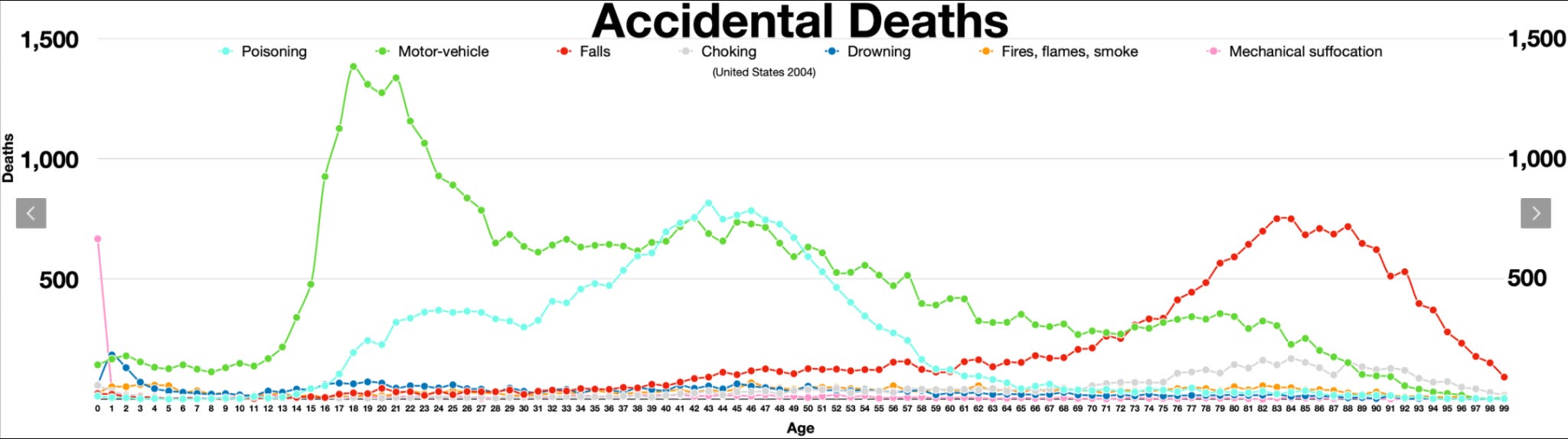
US, 2004:
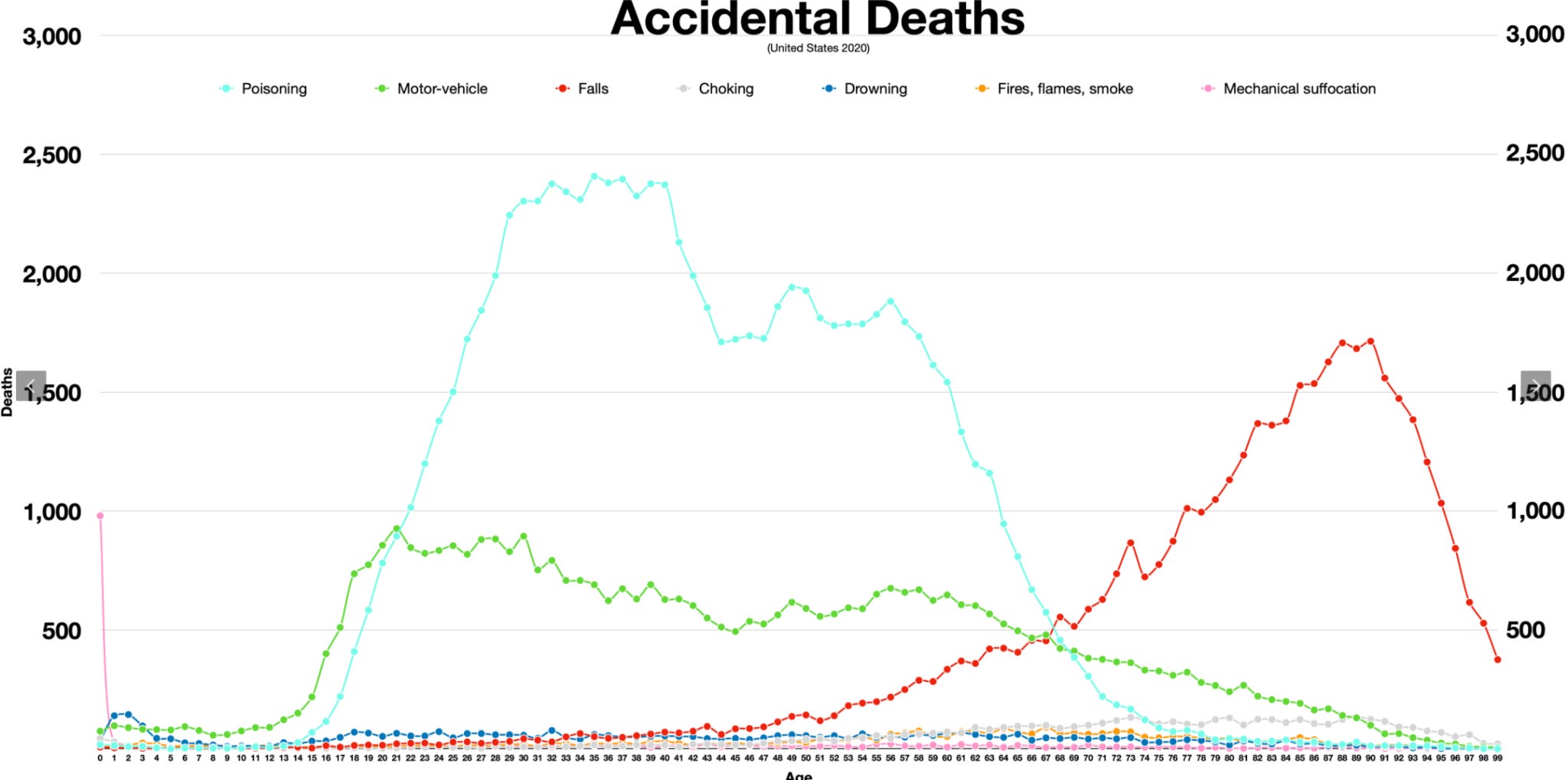
US, 2020:
Source: Wikipedia
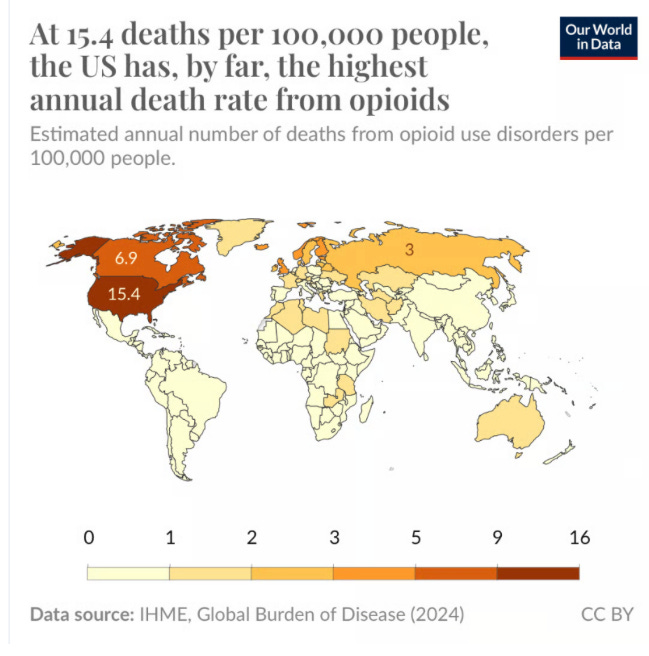
Although the past decade has seen American drivers become more dangerous, they are no longer the leading cause of ‘accidental death’ for people in their twenties and thirties. Partly this is because of trends like the decline of drunk driving. But mainly it is because of the opioid crisis, which has become the dominant cause of accidental deaths for adults between the ages of about 20-70. As a result, while the most car-dangerous states are southeastern ones like Mississippi12 and Louisiana, some of the states with the highest number of accidental deaths of all types are now in the Midwest, where car deaths remain common while overdoses have become especially so.
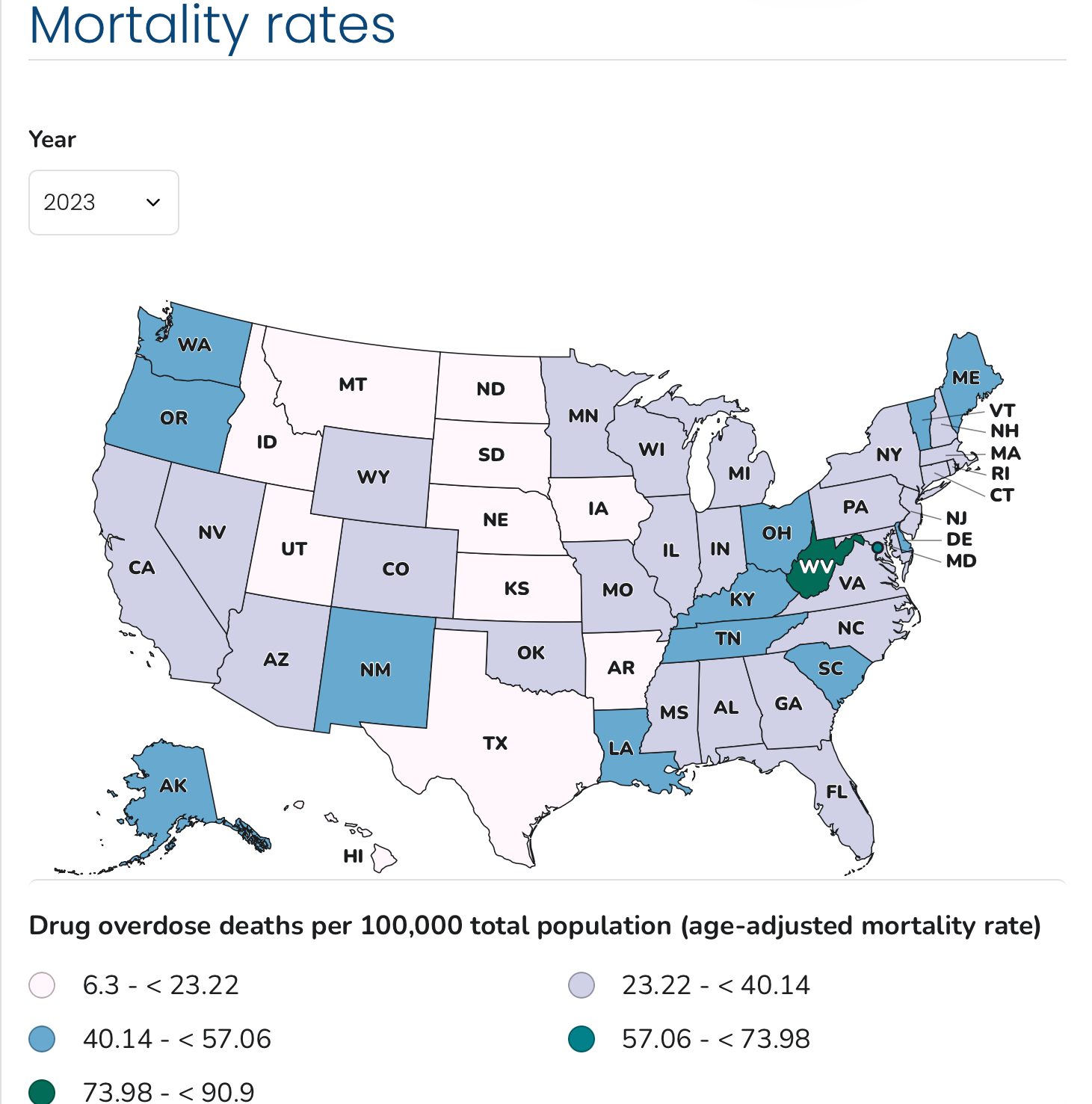
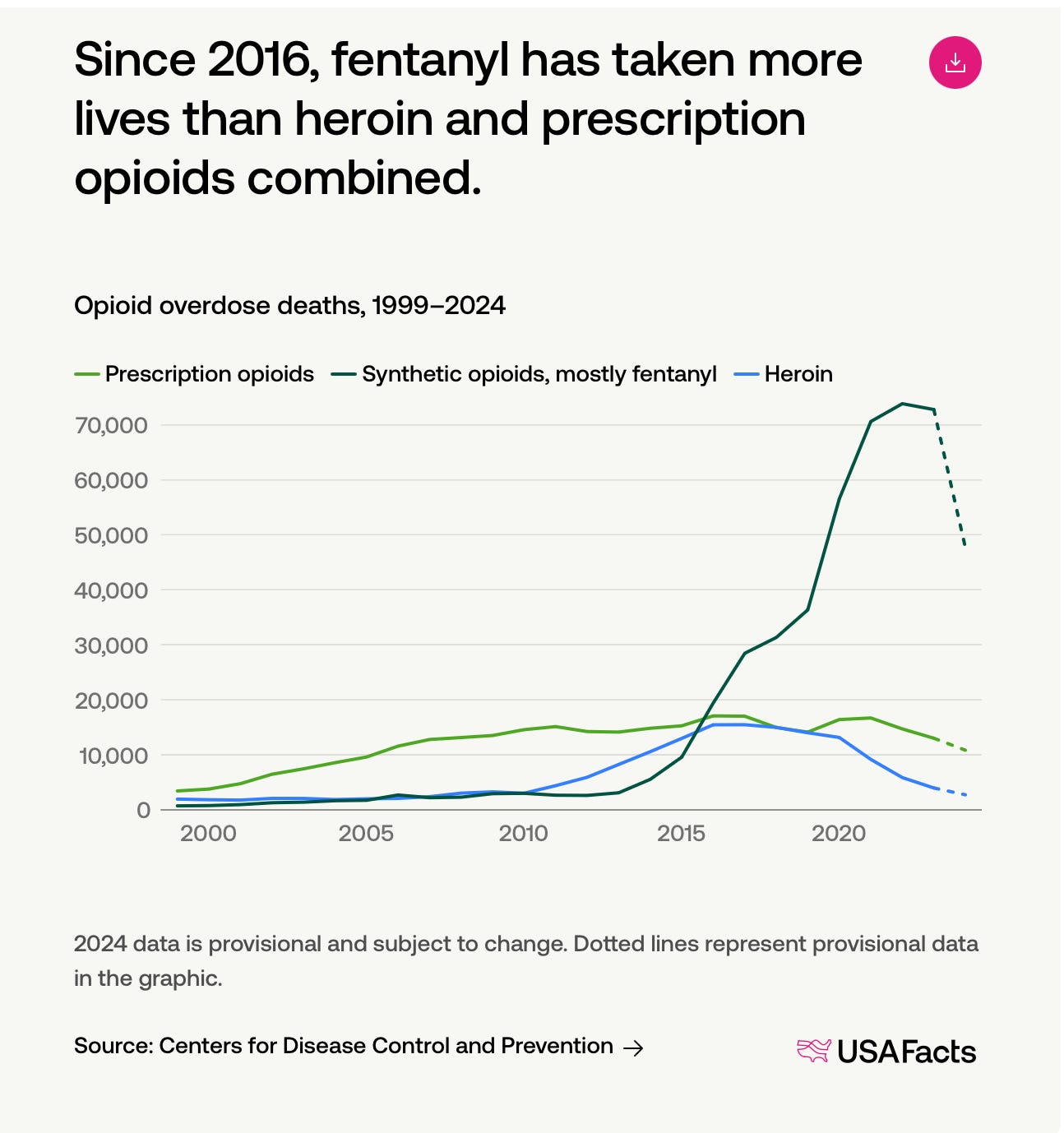
One reason why George Floyd’s death was such a political flashpoint was that it combined so many topics: race and policing obviously, and covid and the 2020 presidential election, but also the opioid crisis. At the trial of Derek Chauvin, the officer who knelt on Floyd’s neck for nine minutes, both sides agreed that Floyd had a high level of fentanyl in his system at the time of his death, disagreeing instead over the relevance of that fact. Politically, the rapid rise of fentanyl overdoses, which began around 2013 and peaked in 2022, likely played a role in the success of Trump, and more recently the emergence of JD Vance, in Midwestern swing states in particular.13 Which of course gets us to where we are today, with another round of protests in Minneapolis like there was in 2020, and with Trump lying about the harms done by ICE officers there14.
Because I’m going to insist in this article on approaching every subject like a conspiracy theorist – specifically, on seeing in every corner of American politics the hidden hand of Big Car – let’s quickly discuss the role that cars might have played in George Floyd’s life, and the opioid crisis generally.
First, the direct role. In May of 2019 Floyd was arrested while driving under the influence of Percocet. On January 3, 2020, according to the Washington Post, “George Floyd was stopped again for speeding. He was driving a delivery truck but could not prove to the officer that he had the right permits. Six days later, a Minnesota State Patrol officer witnessed the same delivery truck weaving in traffic and crash into another car at a red light. Floyd told the trooper he had been falling asleep.” He lost his delivery driver job in January as a result of the crash, and soon after lost another job, working as a bouncer, because of the start of the pandemic lockdowns in March.
This highlights two of the main linkages between cars and opioids. First, that drug users often get behind the wheel of a car and crash15. Second, that addictions to painkillers often form, or worsen, because of injuries from car crashes, or from working as professional drivers16. Even for non-professional drivers, a regular long commute can contribute to chronic pain and stress. This can sometimes be a vicious cycle (e.g. crashes leads to painkillers leads to crashes…), as might have been the case for George Floyd. Though Floyd, like many Americans, also had preexisting health issues, and a prior history of drug problems, even before his car crash and opioid usage in 2020.
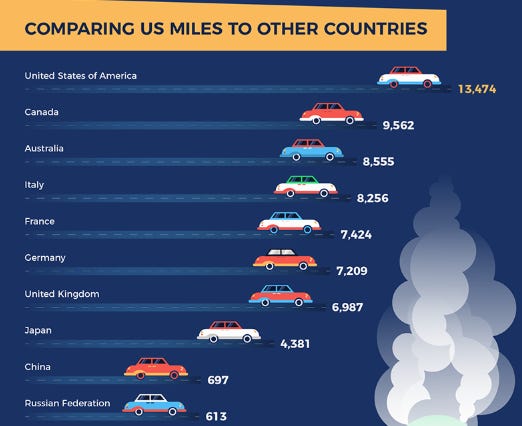
Source: https://www.youcallwehaul.com/driving-miles-u-s-vs-international/
Obviously, even more than the opioid crisis, George Floyd’s story centred around issues of race. As we’ve already seen, the number of black Americans killed in road crashes actually rose significantly during the Black Lives Matter era17, whether because of covid or because of changes in policing following the George Floyd protests.18 And as we’ve already seen, pedestrian deaths have risen rapidly in the US during the past decade – and black pedestrians are killed at about double the rate (per capita) as white ones.
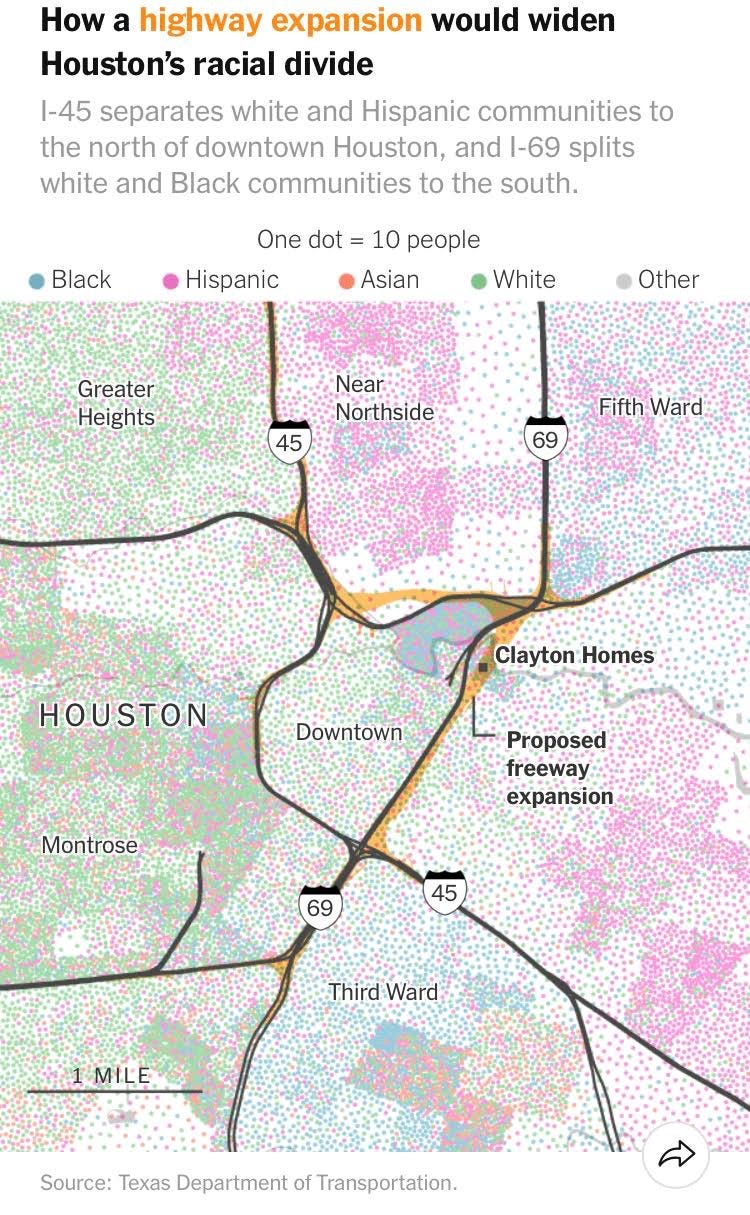
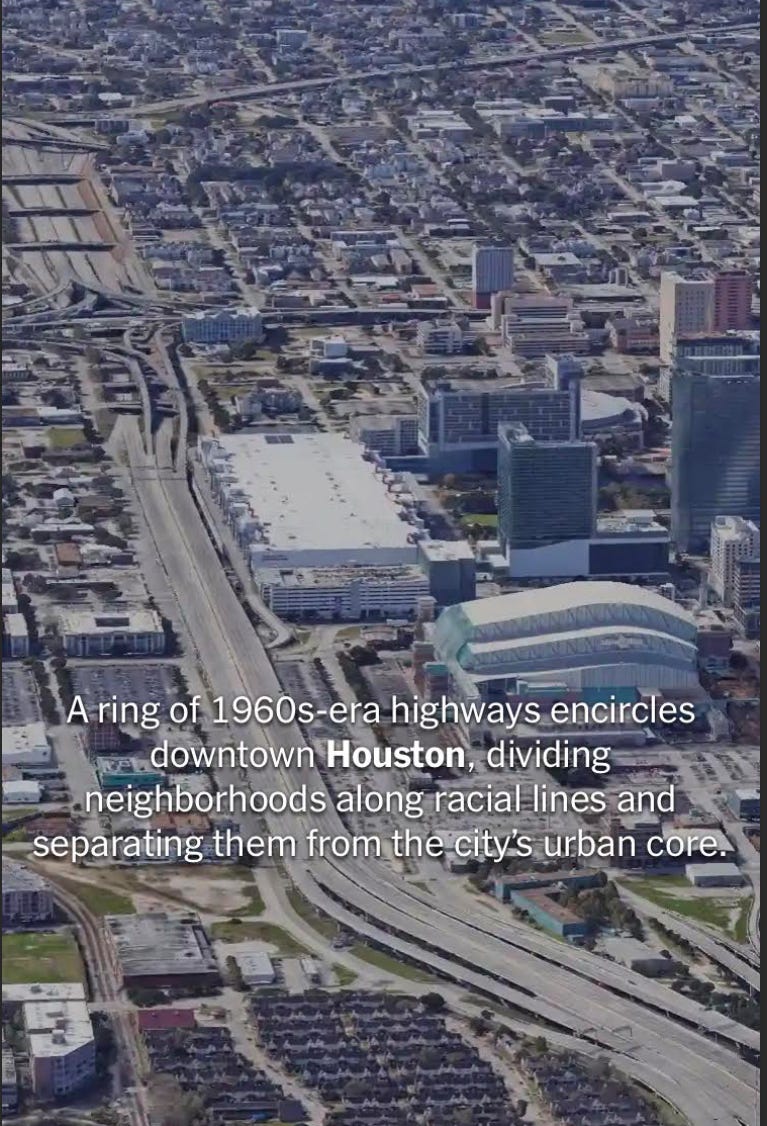
But that is just the direct toll. The subject of how cars and race have interacted in America, often extremely negatively, is a big one; many books have been written about it. In the case of George Floyd, while I have no idea to what extent, if any, cars shaped his life before 202019, the neighbourhood he grew up in, Houston’s Third Ward in the 1970s and 1980s, might for various reasons have been among the most car-damaged places and times in America.
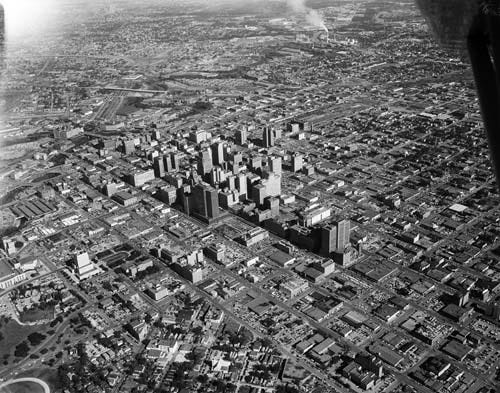
Downtown Houston in the 1950s, before the highways:
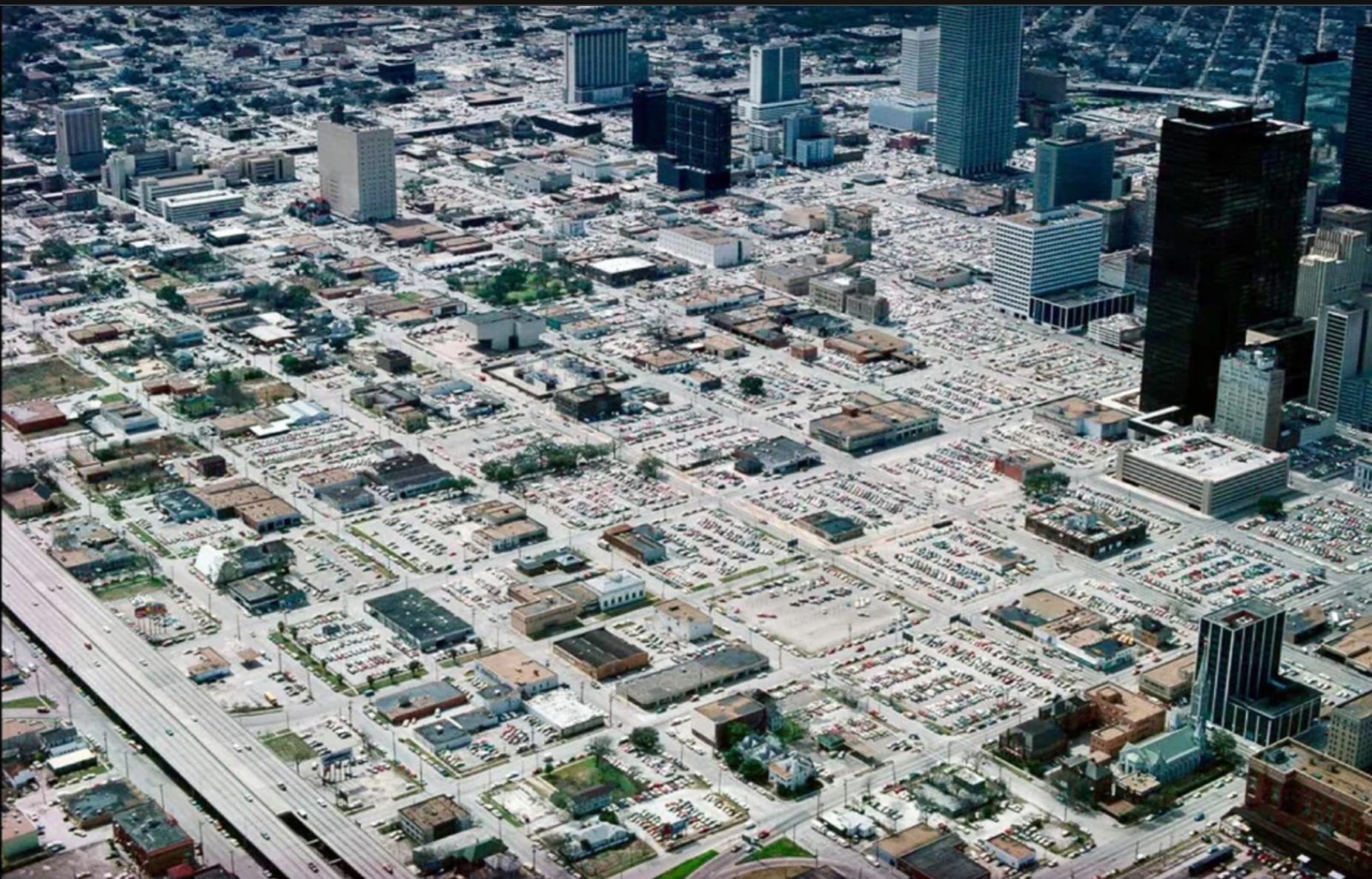
A famous picture of downtown Houston’s parking lots in the 1970s:
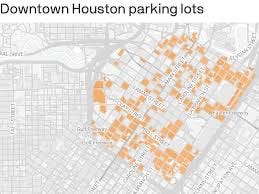
Modern Houston (in 2023): better, but still more than ¼ of its downtown land is parking lots:
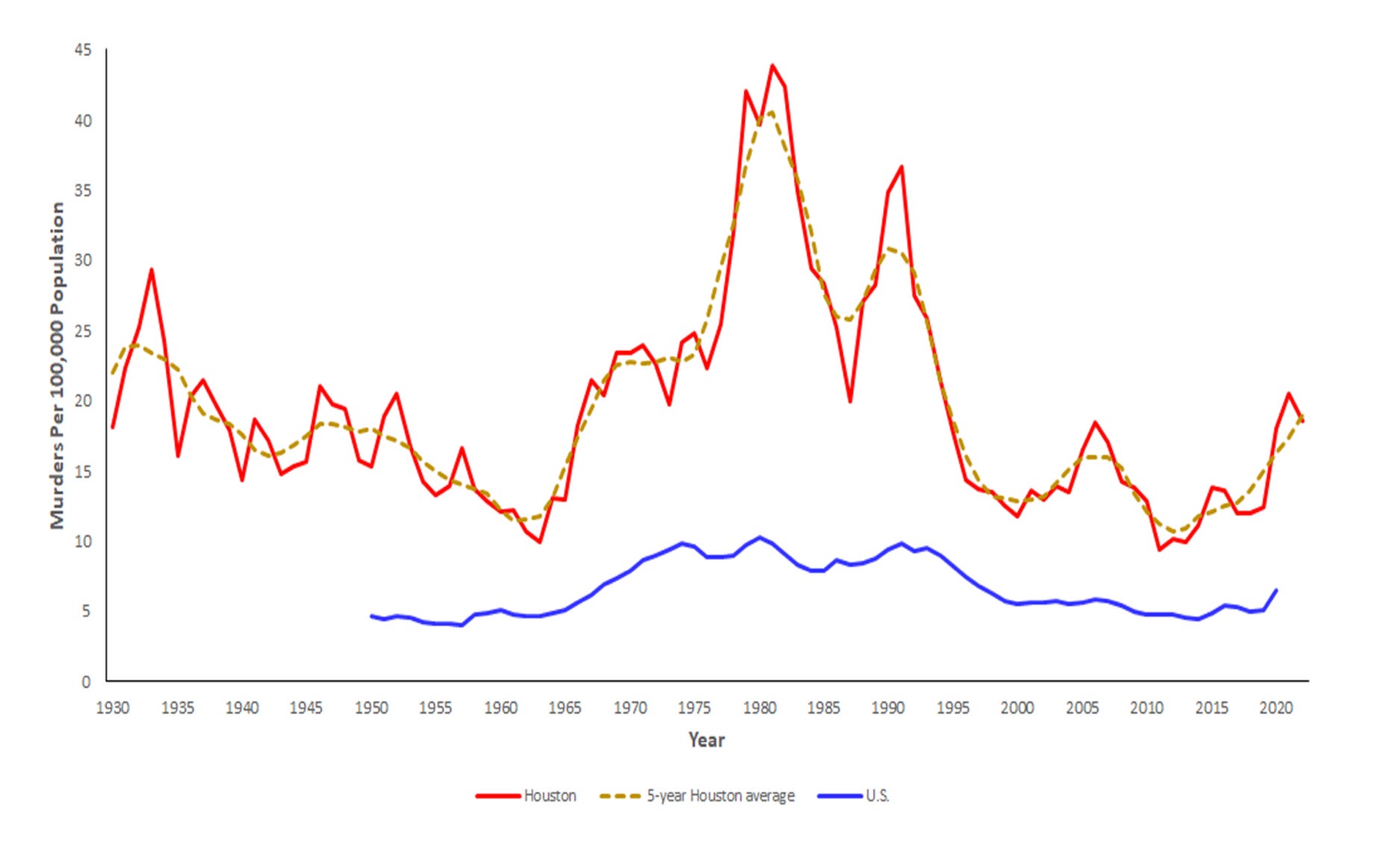
George Floyd was born on October 14, 1973, three days before the Arab oil embargo that was the catalyst for the first era of high energy prices (1973-1985). This was a tough period financially for many Americans, including Floyd who grew up in a public housing project near downtown Houston, at a time when Houston’s oil economy was booming but its murder rate was the highest among major US cities. (Houston’s road death rate was also among the highest, though back then it was lower than the murder rate). The crime wave lasted until the mid-1990s.
It has often been suggested that leaded gasoline, which reached its peak impact among children born in the 1960s and early 1970s, might have played a significant role in causing the wave, before it began to be gradually phased out in 1974 and was finally banned in 1996. Lead air pollution and the use of lead-based paint in homes in poorer areas like Houston’s Third Ward were especially high, which may have contributed to it being a tough place to grow up and live in20.
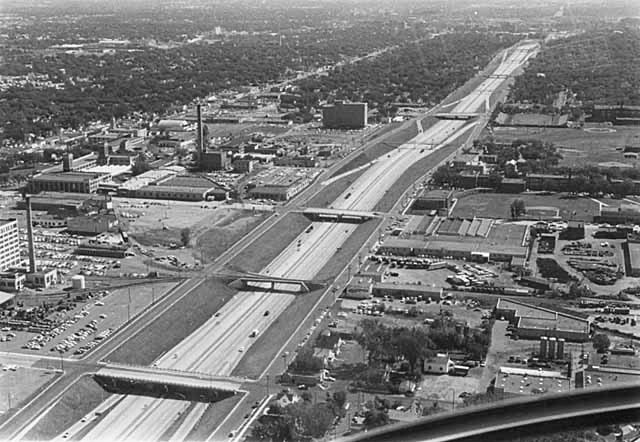
Even if the lead-crime hypothesis is false, the broader impacts of Houston’s wide encircling highways, parking lots, and car-dominant road design were almost certainly negative. They isolated, harmed, and dramatically heated up neighbourhoods, while doing little to help those who can’t drive, or can’t easily afford to drive. Houston remains one of the most polluted cities in the US today. Its deadliest year ever for road crashes was in 2024, in absolute terms. Approximately one-third of those killed were black Americans, and approximately one-third of those killed were pedestrians.
Ironically, Derek Chauvin’s defence lawyer didn’t just argue that fentanyl might have been the catalyst for George Floyd’s death. He also claimed that car exhaust from the adjacent police car might, in addition to fentanyl, have triggered Floyd’s heart failure. This was obviously just a lawyer grasping for straws...even for me it’s an anti-car bridge too far. But in a roundabout way,21 car exhaust really might have played a role in this story: in the health and mental health crises that have impacted so many Americans, and disproportionately black Americans, who have in nearly every way faced more of the harms and fewer of the benefits of US-style roads and car-controlled cities.22
Memorial Day, the day George Floyd was murdered, is also the deadliest weekend of the year for road crashes, with more than four hundred Americans killed per year in recent years.23
Cars have been the leading cause of child deaths since the 1960s, in part because of rising car ownership but mainly because of the decline in infectious diseases. Vaccines for diseases like measles, mumps, and rubella were all developed in the sixties – the decade of JFK, RFK, and Chappaquiddick. Today, the most famous member of Trump’s cabinet, whose brothers and uncle have been affected by several24 devastating car crashes, is RFK Jr, the man tasked with addressing America’s health crisis. He is trying to make America healthy again not just while undermining trust in child vaccination, but also while never mentioning the leading role that car-dominant urban planning plays in the American health crisis, for children as well as for adults.
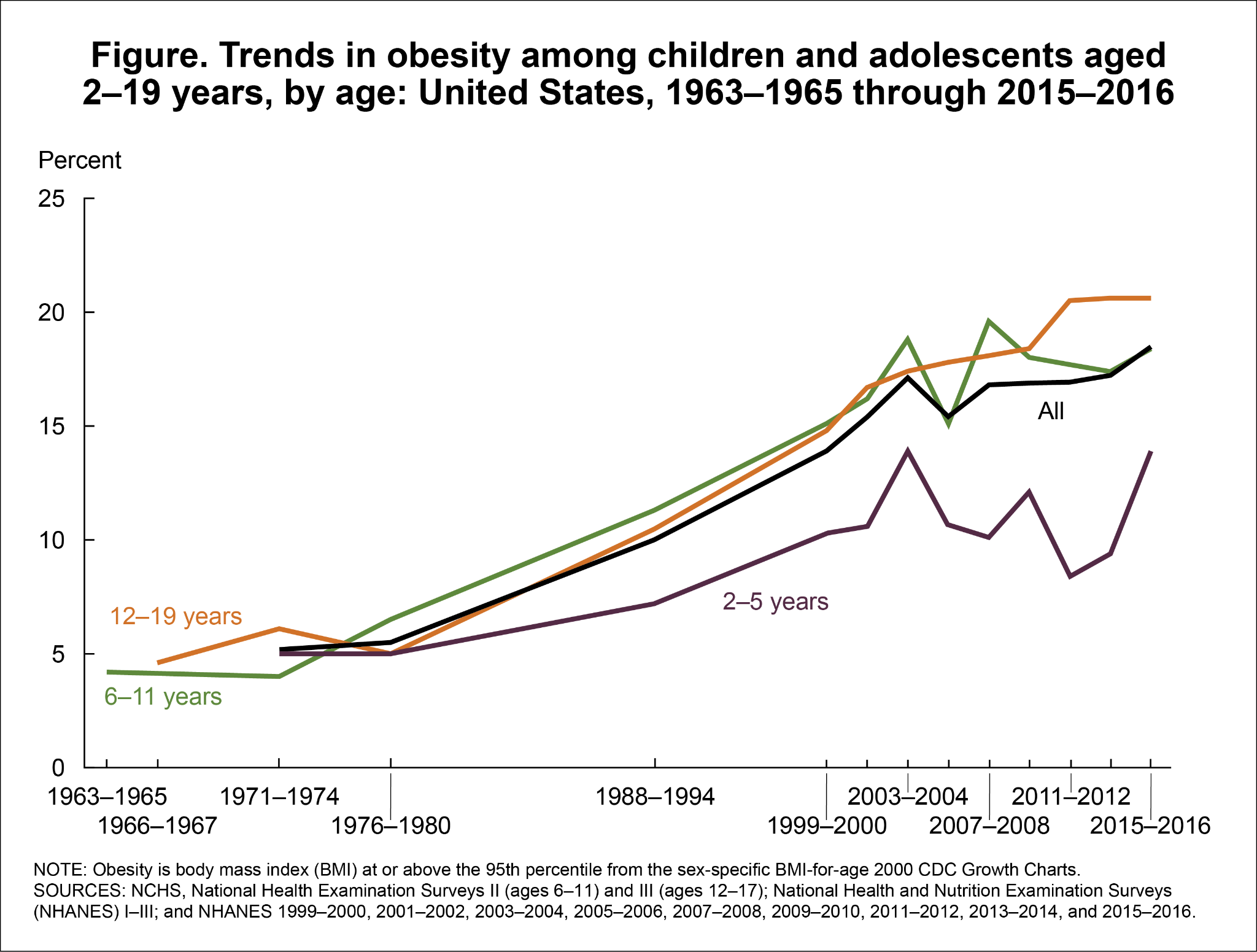
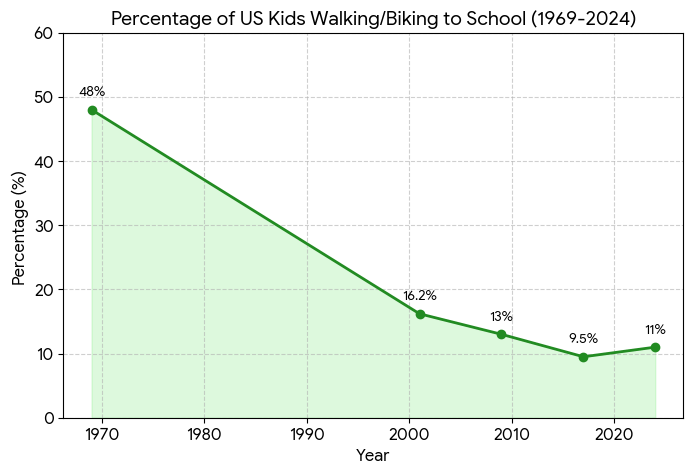
Even for the big issue where, broadly speaking, RFK Jr has been on the right track – eating less junk food and processed food – he has never recognized the role that American-style cities play in influencing American diets. Most people who eat well do so because they have available time or money. People who have to spend hundreds of hours each year commuting to work, or who are struggling to pay thousands of dollars each year on their car so that they can commute to work, will more often rely on eating processed foods, which are quicker to prepare and cheap to buy.
The best solutions to America’s health crisis are probably healthier-designed suburbs and cities, such as those that exist in countries like (for example) Japan. These will become even more important as Baby Boomers reach old age (as they have in Japan) and lose their ability to drive. But RFK Jr has largely stayed away from identifying urban planning issues as health concerns, presumably because Republicans revere the car/SUV/pickup truck-led status quo. To create suburbs and cities that are walkable, friendly to small businesses (including grocery stores you can walk to), and affordable to live in, would mean removing many driving lanes and parking spots.
The day before Renee Good was killed, Congressman Jim Baird, an 80-year-old Republican representing Indiana’s 4th District, was driving in West Virginia when his SUV was crashed into by a pickup truck, hospitalizing him and, after several weeks in the hospital, killing his wife Denise. Indiana, formerly the heart of America’s auto industry – still the American home of the Subaru Outback – has nearly as many road deaths each year as the continent of Australia25. Another Indiana Republican, Jackie Walorski, was killed in a crash in 2022, along with three others.
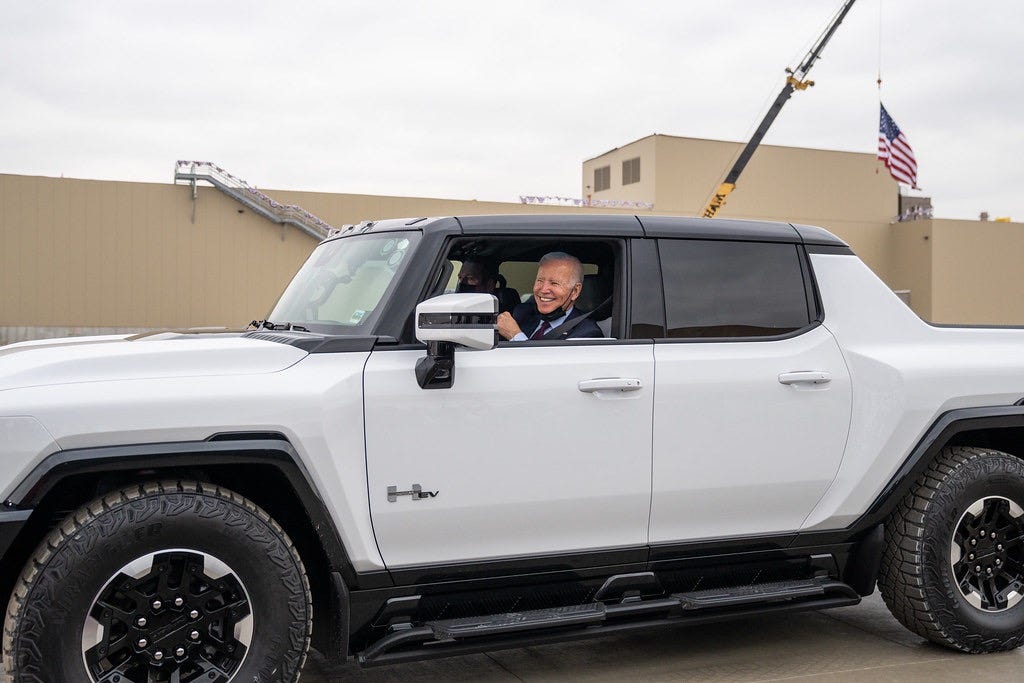
Like Joe Biden, Iran’s current president, Masoud Pezeshkian, lost his wife and child in a car crash in 1994. In some ways Iran and America are similar countries: both are significant oil producers, both are countries in which road crashes, far more even than war, remain a main source of violence. Since its revolution in 1979, an estimated 200,000-400,000 Iranians have died in war (mainly the Iran-Iraq War), but well over 1 million have died in road crashes. In the past year alone Iran has had approximately 20,000 road deaths, more than the entire European Union.
In the current war, an estimated 1,500-3,000 Iranians have been killed. In the US there have been 14 war deaths. Yet every day of the war more than 100 Americans have been killed in road crashes. 1945 was the last year America lost more lives fighting overseas than in road crashes at home. Since 2000 even the number of active-duty US soldiers killed in road crashes exceeds those killed in war.
Regardless of who you blame for the war against Iran, or what the war’s impact on energy prices ends up being over the coming years, it is clearly revealing the fact that when oil prices do rise, it is people in energy-and-income-poor countries, such as India and Pakistan, who suffer the most. For this reason, wasteful oil users in countries like the US and Canada – where oil consumption per capita is 2-3 times higher than in Japan and Western Europe, and 4-5 times higher than in China – may be harming the poor populations of countries like India, even when there is no war on26.
One day after Renee Good, Aaron Williams, and other innocents were killed on US roads, Elon Musk, one of the country’s leading producers of absurdly unsafe trucks, tweeted the following:
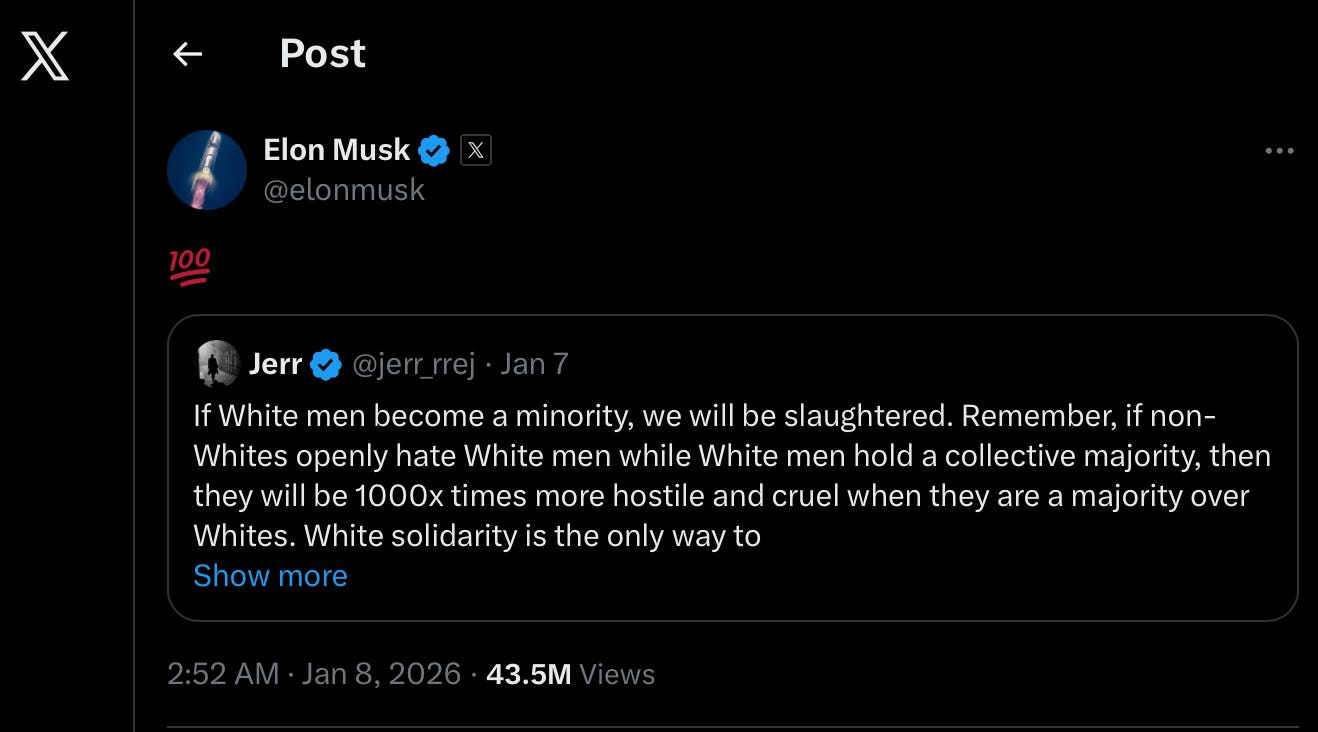
It is tweets like this that make one suspect that Musk’s salutes at Trump’s second inauguration weren’t just Moland Springs mistakes made by a strange man, but might have actually been intentional.
As did Musk’s response to this tweet, a year before he joined the Trump administration:
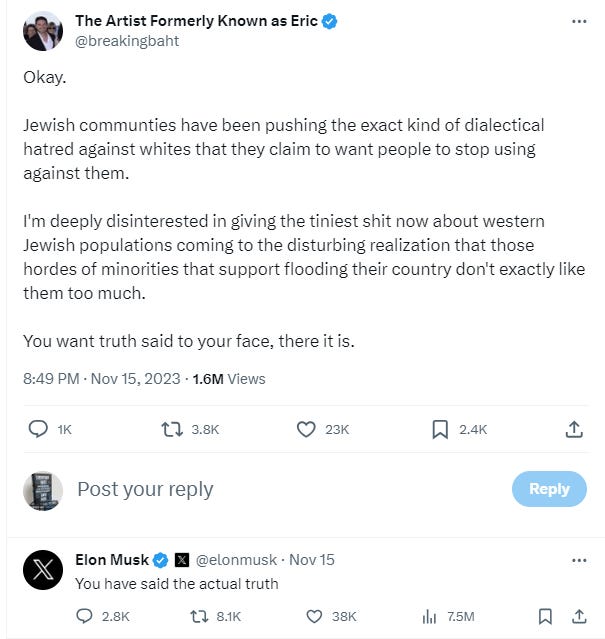
This is a familiar sight. Before the 2010s-20s, the last time American pedestrian deaths nearly doubled in less than a decade was the 1910s-20s, when Henry Ford was publishing the Protocols of the Elders of Zion in his Dearborn Independent, in a series of pamphlets called The International Jew:

While there are many differences between Musk and Ford27, and between the 1920s28 and 2020s, in both cases their key concern was high immigration, along with falling birth rates among white Americans. In absolute terms, immigration peaked in the 1920s and was not surpassed until the 1990s. As a percentage of America’s total population, immigrants did not surpass the 1920s until 2023.
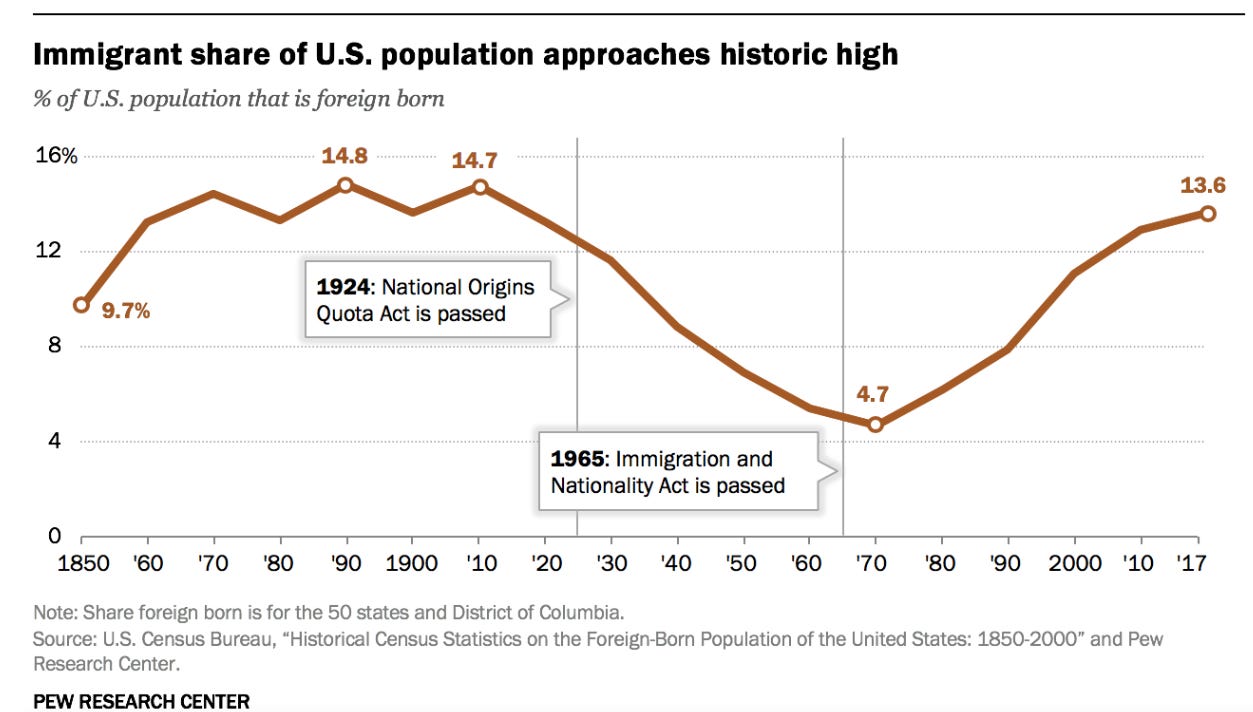
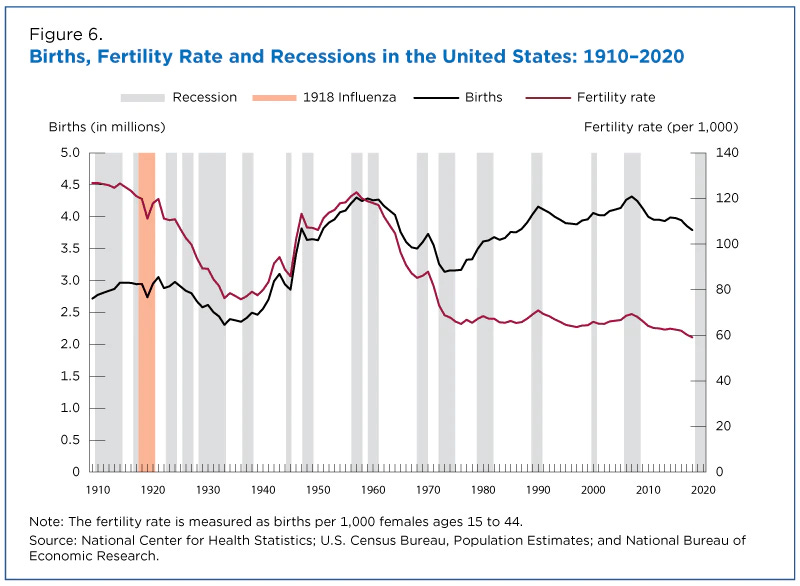
In Indiana, for example, the fear of immigration and high Catholic birth rates29 in the 1920s led roughly 30 percent of the state’s US-born white Protestants to join the second Ku Klux Klan, including Indiana’s governor. Unlike the deadlier, original Klan in the 19th Century American South, this was an anti-Catholic, anti-Jewish organization, in addition to being white supremacist. Indiana had the highest rate of membership, but Michigan, where Ford was a Klan supporter, was also one of its three or four major states.
Meanwhile, in cities like New York, where Catholic and Jewish immigrants and black Americans tended to live in densely populated neighbourhoods, children were being killed in large numbers by the arrival of private cars. In 1921, nearly half of the 13,000 Americans killed in road crashes were children. That proportion is thankfully far lower today30. But it is lower not just because of improvements in child road safety. It is also because children no longer walk around freely in cities nearly as much as they used to. And, of course, because people no longer have as many children.

This the crux of today’s political situation, at least for anyone who believes what people like Musk are saying. If immigration is high and fertility rates are falling – as was the case in the 1910s and early 1920s, and has been in the 2010s and early 2020s – then people will more easily believe their country or civilization faces a long-term existential risk, and so may be willing to tolerate or support politicians like Trump, and policies like the Trump administration’s anti-immigrant crackdown.
Which leads us, finally, back to where we started: the Great Replacement conspiracy theory, the “Jews will not replace us” idea that urban liberals are promoting mass immigration on the one hand, and lifestyles that lead to low fertility rates on the other. Obviously, there is a grain of truth here: city folk do tend to have low birth rates and are relatively open to immigration. But if we’re really looking for what is driving fertility below replacement levels, we need to talk about cars.
The Great Repavement: Car-Dominant Cities Drive American Fertility Rates Below Replacement
This is my pet conspiracy theory…and like most conspiracy theories it’s probably just a hunch at best, or dead wrong. But anyway here it is. Let’s do correlation first, then causation:
A high number of cars per square kilometre tends to be correlated with low fertility rates. Urban areas generally have between 2-20+ more cars per sq km than suburban areas, and 50-100+ more cars per sq km than rural areas. Urban areas also tend to have about 1-2 times as much space per sq km devoted to driving or parking than do suburban areas, and 2-5 times as much space per km devoted to highways. Fertility rates have tended to fall alongside urbanization and development, both of which lead to more people living in areas with lots of cars per sq. km. Even in America, where the population of urban cores shrank in the mid-20th century due to suburbanization, the number of cars in those urban cores still rose in spite of the falling population. And the amount of space devoted to cars in urban cores rose even more, due to the construction of highways and parking lots.
Until about the 1960s-1970s, Americans drove much less on Sunday than they do now. Similarly, religious Jews do not drive on the sabbath or holidays. Because they also have to congregate on these days, this means their communities are usually walkable. In effect, it also means their communities have relatively few cars per sq km every single weekend of the year, when kids are off school. Partly as a result, they also have much lower rates of car ownership than many other populations in developed economies. In Haredi communities in Israel, car ownership rates will often be only 25-40 percent. (Even among Haredim, those who own cars likely now have lower fertility rates than those who don’t). Other high-fertility groups, like the Amish, often don’t drive much at all.31
For obvious reasons, there is a significant correlation between housing affordability and fertility. In turn, the American style of designing cities for cars may be the primary driver of expensive housing:
Zoning restrictions are in place partly because of NIMBYism among existing home owners, which is often driven by car-related concerns. Homeowners understandably worry that adding housing density to their neighbourhoods will make their quiet streets full of traffic, and turn their easy-to-find parking spots into places where you can never be certain of finding parking easily.
The amount of urban and suburban space devoted to cars in America – to things like parking lots and highway interchange archipelagos – is so vast that tens or even hundreds of millions of people could live in an area of its size.
While the use of cars in general makes it easier for cities to expand outward, and so probably makes housing more plentiful, the American way of misusing cars – of long commutes in giant cars on wide highways in traffic jams, with few decent transit alternatives – makes it much harder for people to live in outlying suburbs or towns, thus driving up the price of housing nearer to urban centres. In effect, this also drives up the cost of living outside of urban centres, because suburbanites must necessarily spend money on buying and fuelling their cars.
Homeowners pay a huge premium to live on a quiet street, as compared to a busy main street nearby that is full of cars. A house on a low-traffic street will often be worth hundreds of thousands of dollars more than the same house would on a busy one. The fact that so many American streets are busy ones full of cars therefore drives up the price of homes on the quiet streets that people actually want to live and raise families on.
Increasingly, cars are directly leading large numbers of houses and basements to flood, or to have higher insurance costs because of the risk of flooding. This is because cities full of asphalt are much more flood-prone than they could otherwise be. Cars also, of course, play an indirect role in flooding, via greenhouse gasses. A somewhat similar situation exists for other threats to housing, from storms, fires, urban heat, etc.32
The amount of rural land in the US devoted to producing biofuels is about 200,000 sq km, about the size of Great Britain or Nebraska
Being stuck in traffic and raising children are both extremely time-consuming. Driving children around because they can’t safely walk, bike, or take transit is especially so.
The amount of money that parents and governments spend on children is very large; the amount of money that parents and governments spend on cars is very large. Spending less — or more importantly, wasting less — on cars could free up more for childcare.
Cars also directly lower birth rates to a certain extent, by killing and injuring people, and by contributing to pollution that may lead to higher rates of infertility in both men and women.
Alright, there’s the theory. Is there any truth to it? What do you think? We do know that highways and busy roads tend to lower fertility rates among animals. Whether that includes humans is harder to say.
Conclusion - North American SUVs are now bigger than Jesus33
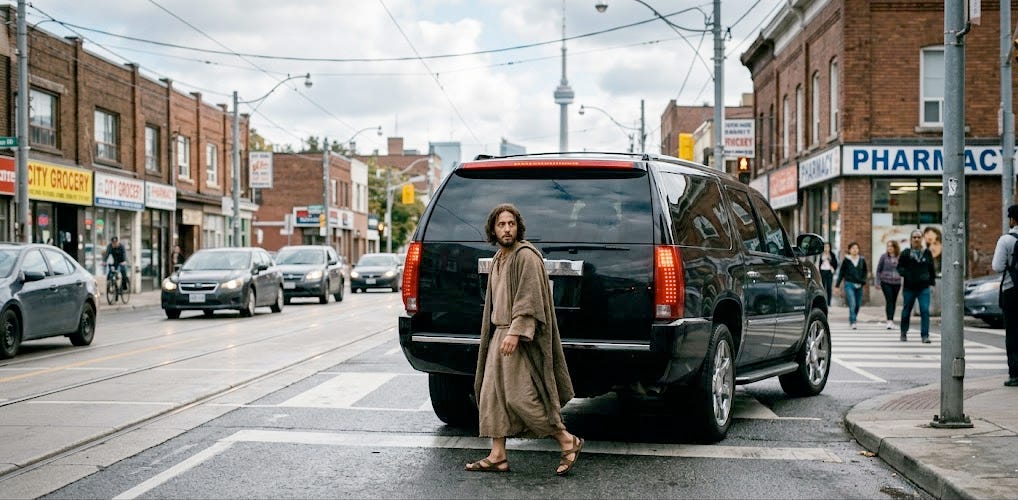
After the door to European immigration was shut in America and other countries in the 1920s, at the dawn of the automobile century, many of the immigrants who were kept out later became victims of the Holocaust, and/or ended up in Israel. Now, in the 2020s, many Americans spend their time on the internet, where there is no car traffic to worry about, and where you don’t need a parent to drive you from site to site – but where there are plenty of conspiracy theories to wallow in. After a generation of high immigration and wars in the Middle East, an increasing number of those conspiracies are both anti-refugee and anti-semitic.
The most extreme harken back to conspiracies much older than the great replacement theory: back all the way to the blood libel, the idea that the Jews conspired to kill Christ, or that they targeted Christian children on subsequent Passovers. Meanwhile, during this Easter/Passover alone, which ended last week, several dozen American kids were killed by cars, and hundreds injured. Given today’s lower birthrate (in part due to the Great Repavement), it can be assumed that many of those slain were firstborn.
Footnotes
According to the Associated Press, “The fatal shooting Wednesday of a woman by an immigration officer in Minneapolis was at least the fifth death to result from the aggressive U.S. immigration crackdown the Trump administration launched last year…Last September, Immigration and Customs Enforcement fatally shot another person outside Chicago. Two people have died after being struck by vehicles while fleeing immigration authorities. And a California farmworker fell from a greenhouse and broke his neck during an ICE raid last July.”
In between these two events, on Oct 4, 2025, “Marimar Martinez, of Chicago, was shot five times by U.S. Customs and Border Protection agents and then labeled a domestic terrorist and charged, without proof, of ramming them with her car. Those charges were later dropped”. Martinez testified in front of Congress, alongside Renee Good’s brothers, on Feb 3, 2026
Taking a leaf from Doug Ford, who banned all of Ontario’s speed cameras in November.
D.C. alone had only one fewer pedestrian death last year than the Netherlands, which has a population more than 20 times larger than D.C.
Hockey is a dangerous sport mainly because of all the long-distance winter driving, but it is generally much safer on Canadian or European roads than American or Russian ones. In addition to Herb Brooks, one of the top Soviet players of his era, Valeri Kharlamov, who nearly tied the game for the Soviets at the end of Miracle on Ice, died in a car crash in 1981. Another star player who played in that game, Viacheslev Fetisov, died in a car crash in 1985.
(Also, “Pelle Lindbergh was the first European-born goaltender to be drafted in the NHL entry draft and the first to win the Vezina trophy for the league’s best goalie. He died at age 26 in a single-car accident while drunk five months after leading the Flyers to the 1985 Stanley Cup Final and winning the Vezina”… “George Dale Pelawa was a high school hockey right winger from Bemidji, Minnesota. He was named Minnesota Mr. Hockey in 1986 as the top high-school player in the state and was selected in the first round, 16th overall, by the Calgary Flames in the 1986 NHL Entry Draft. He died in an automobile accident three months after the draft).
Lately fired from that role and given the newly created position of special envoy to the Shield of the Americas instead
Routh was charged with attempted felony murder because of the girl’s injuries. That was fair in this case, but frequently felony murder charges in the US, caused by car crashes after a crime has been carried out, are unjust.
One of the most famous wrongful conviction cases in Minneapolis also involved this Cup Foods corner store. Myon Burrel, a 16-year-old accused of murder, whose mother died in a car crash three weeks after his arrest, was released from jail in December 2020, after serving 18 years. His sentence was commuted because of his likely innocence, in an investigation that police had badly mishandled. Tragically, Burrel was rearrested after a DUI in 2023, with a gun and drugs in the car.
Traffic cameras are already relatively rare in America. Britain for example has roughly as many as the entire US, despite being about 40 times smaller in area and having vastly safer roads. London alone has over 900 speed cameras, and nearly 1 million CCTV cameras. In Germany and France, not only are speed cameras used, but it is illegal for drivers to use devices warning them of upcoming cameras. In Japan, among other things, speed cameras are relatively common on major roads, but they only turn on when drivers are going more than 30-40 km per hour above the speed limit, so that only the worst drivers are surveilled. Australia and Canada both have significantly more speed cameras per capita than the US has.
Even more chillingly, watch this recent clip of Trump supporter Larry Ellison, currently the world’s wealthiest man apart from Elon Musk, eagerly describing an AI-based surveillance society.
Collins is running for governor of Florida later this year, as DeSantis is ineligible to run for a third term. In Afghanistan, where Collins lost a leg in 2014, the US lost approximately 2459 soldiers in twenty years. In Florida, in the nine months since Collins became lieutenant governor in August 2025, nearly as many Floridians have been killed in road crashes. In the past twenty years, approximately 59,000 Floridians have been.
Mississippi’s crash death rate per capita is about the same as Iraq or Sudan’s, surpassed only by some other African states, the Dominican Republic, and Yemen. Massachusetts’, the lowest in the US, is still 2x as high as Canada’s
JD Vance’s mother, an addict, was arrested after she threatened to kill him by crashing her speeding car, after which he was raised by his grandmother.
Vance’s home state of Ohio is one of three states that last voted for a Democratic presidential nominee in 2012, along with Florida and Iowa
Minnesota is actually a leader in terms of having a low pedestrian death rate, far below the deadliest states like New Mexico and Arizona. Only Nebraska is lower, per capita.
There are more than 3 million crashes in the US per year. There are about 3.5 million professional drivers in the US. More than 200 million Americans drive at least 1.5 hours per day on average.
In 2013, when Trump was still questioning whether Obama’s birth certificate had been faked, Black Lives Matter was founded by Alicia Garza, Patrisse Cullors, and Opal Tometi, in response to the acquittal of George Zimmerman, who murdered 17-year-old Trayvon Martin in Florida. One of the other incidents in 2013 that influenced the BLM co-founders’ activism was the killing of Renisha McBride, a 19-year-old who was shot while seeking help after a car crash. Four days after Zimmerman’s acquittal, he and another man helped rescue two parents and kids from an overturned SUV, near where he shot Martin.
“During the George Floyd protests that started in Minneapolis–Saint Paul after the murder of George Floyd, several incidents occurred in which vehicles were driven into protestors. According to Ari Weil, a terrorism researcher, there were 104 incidents of vehicles driving into protests between May 27 and September 27, 2020, with two fatalities in that time period. According to law enforcement and terrorism experts some of the incidents were targeted and politically motivated, however the vast majority were incidents involving scared drivers who were surrounded by protesters in their vehicle. Ari Weil alleges that at least 43 of the incidents were malicious and 39 people were charged.”
Apart from being pulled over by cops while driving many times in his life, whether for legitimate reasons and/or for ‘driving while black’.
The intersection of Fannin and Pease, which has the most crashes in Houston today, is about 1.2 miles from Floyd’s childhood home.
Incidentally, Americans would also be better off if they embraced roundabout ways.
A final note on George Floyd. His friend, Sylvia Jackson, who loaned him the Mercedes SUV he was driving on the day he was killed, was then unable to recover her car from the Minnesota Bureau of Criminal Apprehension for four years. Reportedly she had to leave her job because she couldn’t get to work without it. Only after Minnesota’s attorney general Keith Ellison intervened on her behalf did she get it back.
In 2025, Ellison also led a bipartisan coalition of 35 state attorneys general in order to hold Kia and Hyundai partially accountable for their cars being stolen at hugely disproportionate rates, which drove the recent surge (relative to the 2010s) in car thefts.
Memorial Day commemorates the approximately 1.2 American military personnel who have been killed in war since 1776. Since 1900, however, not only have there been approximately 4 million Americans killed in road crashes, but just the number of US veterans killed in road crashes might exceed the number of US soldiers killed in war. The number of Americans killed in crashes since 2000 exceeds those killed in war since 1900. Since 1980 even the number of Americans killed in crashes on Memorial Day weekend - approximately 20,000 - exceeds the number of American soldiers killed in war.
“On July 18, 1969, Senator Ted Kennedy drove an Oldsmobile off the Dike Bridge on Chappaquiddick Island, Massachusetts. Kennedy escaped the submerged vehicle, but his passenger, 28-year-old campaign worker Mary Jo Kopechne, died inside. Kennedy did not report the accident to the police for ten hours. He later pleaded guilty to leaving the scene of an accident and received a suspended two-month sentence.
In August 1973, Joseph P. Kennedy II (RFK’s son) was driving a Jeep in Nantucket that overturned. The crash left a passenger, Pam Kelley, permanently paralyzed, and injured Joseph’s brother, David. David overdosed in 1984 at 28 years old. [He was two years older than RFK Jr]. In May 2006, U.S. Congressman Patrick J. Kennedy (son of Ted Kennedy) crashed his car into a barricade near the U.S. Capitol in Washington, D.C.. He later pleaded guilty to driving under the influence of prescription pills”. RFK’s daughter Kerry Kennedy had a DUI in 2014.
One of the worst in Indiana’s history came on December 21, 1996 (that is, three weeks after the death of the Charlottesville killer’s father in neighboring Kentucky). A drunk driver crashed, and two medics stabilized the victim. But as they were driving to the hospital, another drunk driver crashed into their ambulance. This killed the original crash’s victim, and killed the second drunk driver too, and the unborn child of one of the ambulance workers who was pregnant at the time. Then, as the brother of the first drunk driver was trying to reach the site, he crashed his car and died.
This is also true of energy in general: countries like the US, Canada, and Saudi Arabia consume 2-3 times as much primary energy per capita as China, Japan, and Europe
There is at least one somewhat direct line from Ford to Musk. The rise of cars and radio (and in the 1930s, car radios) brought Ford and Father Coughlin to prominence, respectively, both in Detroit (though Coughlin, who launched his radio show in 1926, was Canadian). In the 1930s, roughly 1 in 3 American cars were Fords, and roughly 1 in 3 American radio listeners tuned in to Coughlin’s antisemitic (among other things) show, or subscribed to his magazine, Social Justice. In Canada, meanwhile, the Social Credit party took off in several provinces (with Coughlin’s guidance) and itself became a bastion of conspiracy theories and antisemitism in the country for a generation. Elon Musk’s grandfather ran for the party to become premier of Saskatchewan in 1948, losing to Tommy Douglas, one of the most celebrated politicians in Canadian history (and Donald Sutherland’s father). In some ways, Musk, by being both a car and internet magnate, combines Ford and Coughlin in a single person.
“This article addresses the overlapping backstories to the first three of four auto fatalities that affected F. Scott Fitzgerald’s life and art. It explores biographical information about Fitzgerald’s relationship with his rich St. Paul, Minnesota neighbor Stuart Beebe Shotwell Jr., and two Princeton classmates, Robert E. Sniffin and Charles O. Wiegand. All three individuals died in automobile accidents that deeply cut into Fitzgerald’s psyche. At age thirteen young Fitzgerald saw Mr. Shotwell get run over by a pretty woman driving a fancy car. Seven years later, on the eve of World War I, two of his former Princeton dorm-mates were killed in DUI accidents one night apart. These terrible events may have caused deep-seated trauma for Fitzgerald [and may have] prepared Fitzgerald to dramatize a fourth automobile fatality in The Great Gatsby.”
Since 1980, child road deaths worldwide have dropped from an estimated 200,000 to 120,000 per year, even as the world’s population of children has risen from 1.5 billion to 2 billion. But the incidence of parents losing all of their children in crashes has likely risen, due to the prevalence of only children in Europe, China, and to a lesser extent the US and other countries.
Mormons also often don’t drive much on Sundays, apart from getting to and from church
Occasionally cars even crash into houses, or into buildings generally. According to the Storefront Safety Council, “In the United States, vehicles crash into buildings approximately 100 times per day, totalling over 36,500 incidents annually. These collisions, which include houses, storefronts, and offices, result in roughly 16,000 injuries and over 2,500 deaths each year, with pedal error and operator error being leading causes.”
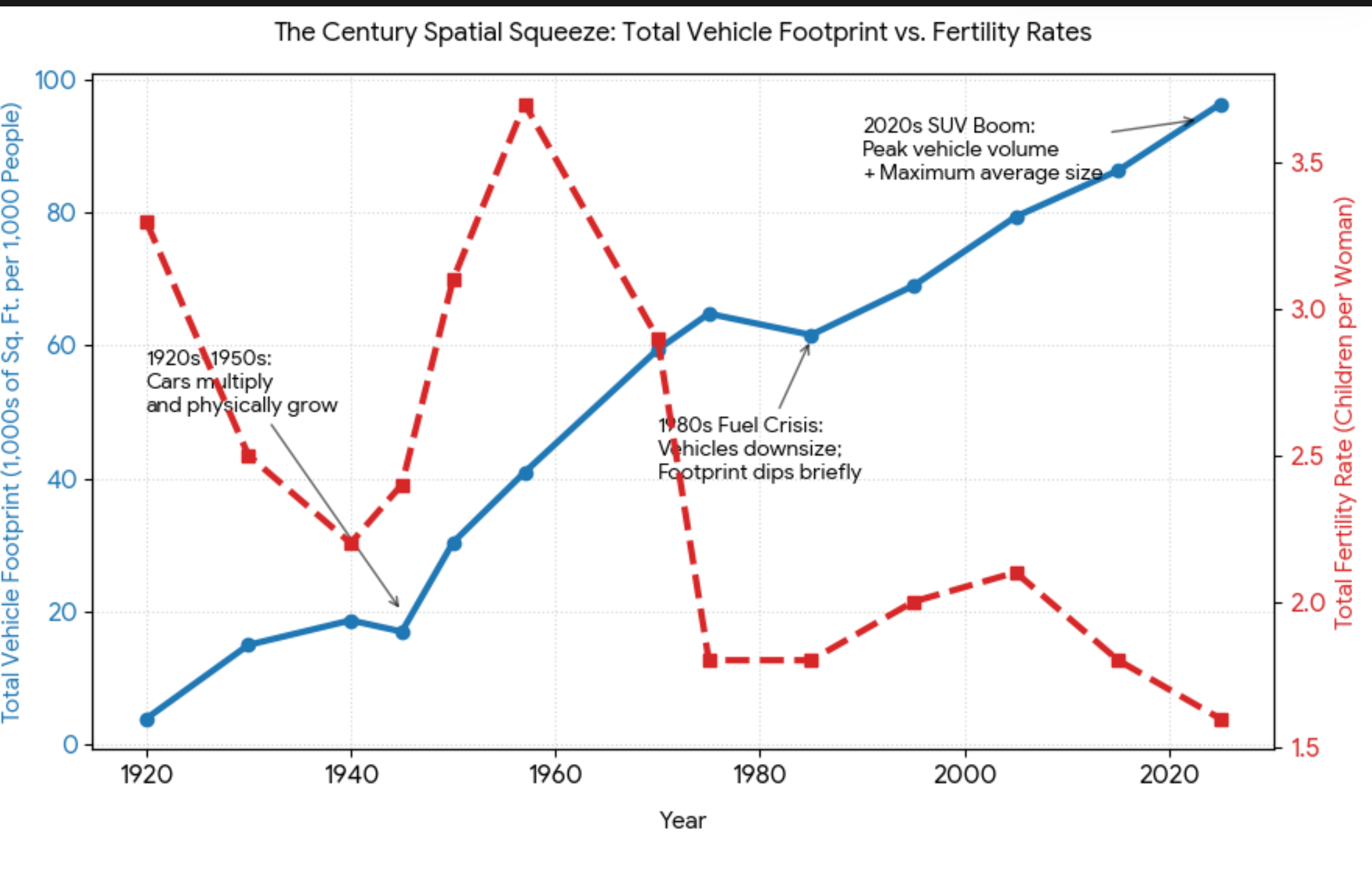
Here’s an AI-generated chart, showing the correlation between the number and average size of cars owned in the US, and fertility rates in the US. Only in the 1940s-1950s and 1990s did cars and fertility both rise. But of course, this correlation might be mostly or entirely a coincidence.